

Have you ever opened a message at the wrong time and wished you had waited? That’s exactly why people use the term NSFW online. You may see it before clicking a link, viewing a picture, or reading a post. It stands for Not Safe For Work and warns you about content that may not be suitable for public places. This could include sexual images, adult jokes, graphic violence, or strong language.
But there’s more to the term than you might think. The nsfw meaning isn’t limited to nude photos or adult content. It can also describe disturbing images and sensitive topics. You may encounter it on Reddit, Discord, Instagram, or Twitter/X. This guide explains its meaning, common uses, different contexts, and simple ways to respond when someone sends you an NSFW message.
What Does NSFW Mean in Texting?
The NSFW meaning in text is Not Safe For Work. People use this internet slang to warn others about potentially inappropriate content. It can appear in a text message, social media post, private chat, or shared link.
When someone sends NSFW, they’re telling you to think twice before opening the content. It might contain sexual material, graphic violence, strong language, or disturbing images.
For example, a friend might send you a video with an NSFW warning. They’re simply giving you a heads-up before you watch it.
Examples of NSFW in texting:
- That video is NSFW. Don’t open it at work.
- NSFW warning! The next picture might surprise you.
- This link contains NSFW content. Open it privately.
- Can I send you something NSFW?
The meaning depends on the conversation. However, NSFW usually works as a content warning rather than a separate message or emotion.
NSFW Full Form and Definition
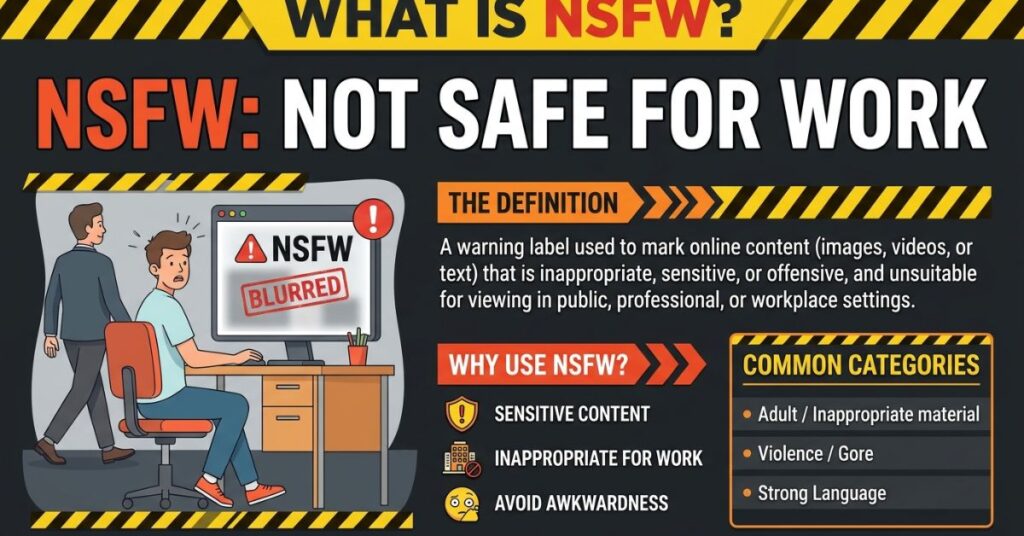
The NSFW full form is Not Safe For Work. It’s a common internet abbreviation that warns people about content they shouldn’t view in certain settings.
You might also see the phrase Not Suitable For Work. Both expressions communicate nearly the same idea. However, Not Safe For Work remains the standard expansion.
People use this text slang across messaging apps, online forums, and social media platforms. It helps the recipient decide whether to open something immediately or wait.
Here’s what the abbreviation communicates:
- N: Not
- S: Safe
- F: For
- W: Work
For example, someone might write, “This podcast is NSFW.” It suggests that the podcast contains mature discussions or explicit language.
Remember, NSFW doesn’t describe one specific type of material. It simply warns you that certain content might not suit a professional environment, school, or public space.
What Kind of Content Is Considered NSFW?
NSFW covers more than adult pictures or sexual conversations. It includes different types of sensitive content that might make someone uncomfortable in public.
The exact meaning depends on the material, audience, and platform policies. Something acceptable in a private setting might feel inappropriate around coworkers or family members.
Common examples include:
- Sexual content: Nudity, explicit images, and adult-themed material.
- Graphic violence: Blood, injuries, and disturbing imagery.
- Strong language: Heavy profanity and offensive expressions.
- Adult humor: Mature jokes or sexually suggestive comments.
- Sensitive discussions: Graphic descriptions or uncomfortable subjects.
For example, a movie clip showing graphic injuries might receive an NSFW label. A picture containing nudity could carry the same warning.
NSFW doesn’t automatically mean pornography. It simply tells you that content may not be suitable for every audience or environment.
What Does an NSFW Warning Mean?
An NSFW warning tells you to be careful before opening or sharing certain content. It’s a simple way to protect viewers from unexpected material.
You might see this warning before a picture, video, article, or online link. It gives the recipient a chance to decide whether they’re comfortable viewing it.
For instance, imagine checking your phone during a work meeting. A friend sends you an NSFW link. The warning reminds you not to open it on a shared screen.
People commonly use NSFW warnings to:
- Alert viewers about sensitive content.
- Prevent awkward moments in public spaces.
- Give recipients time to choose whether to view something.
- Follow community rules and content-labeling systems.
- Respect personal boundaries and viewing preferences.
Example conversation:
- Alex: This video is NSFW. Don’t open it around everyone.
- Jordan: Thanks for the warning. I’ll watch it later.
An NSFW warning doesn’t automatically mean content is illegal or prohibited. It simply describes its viewing suitability. Platform restrictions and content policies are separate matters.
NSFW Meaning on Twitter (X)
On Twitter, now known as X, NSFW refers to content that may not suit public or professional viewing. Users often add this abbreviation before sharing sensitive pictures, videos, or links.
You might encounter it in posts discussing adult themes, nudity, graphic violence, or disturbing imagery. The warning helps followers decide whether they want to view the material.
X also provides sensitive-media settings that help manage how certain images and videos appear. These platform features differ from an informal NSFW warning written by a user.
Common examples include:
- NSFW warning before watching this clip.
- This post contains NSFW images.
- Please check the sensitive-media label before opening.
For example, someone might share a graphic news image with an NSFW warning. They’re giving followers a chance to avoid unexpected content.
Remember, writing NSFW in a post doesn’t automatically make prohibited content acceptable. X still applies its own content moderation rules and platform policies.
NSFW Meaning on Reddit
On Reddit, NSFW stands for Not Safe For Work. It works as a content label for posts and communities containing mature or sensitive material.
You may notice the NSFW tag beside a post title or within an online community. It helps users recognize potentially inappropriate content before opening it.
Reddit also offers NSFW marking and filtering features. These tools help users manage how sensitive material appears while browsing different communities.
For example:
- This post is marked NSFW because it contains graphic images.
- Please add an NSFW tag before sharing that picture.
- The subreddit allows NSFW content under its community rules.
Unlike a simple warning in a text message, Reddit’s NSFW designation can form part of its content-labeling system.
However, the label doesn’t tell you exactly what’s inside a post. It could involve adult content, explicit images, strong language, or disturbing material.
NSFW Meaning on Discord
On Discord, NSFW usually refers to mature or age-restricted content. You may see this label in channels or servers that allow discussions and material unsuitable for younger audiences.
Discord provides age-restricted channel settings for communities that share adult-themed material. These settings help control access to certain spaces.
For example, a server might have a dedicated NSFW channel. Members may need to meet the platform’s age requirements before accessing it.
Common Discord examples include:
- This channel is age-restricted because it contains NSFW content.
- Please follow the server rules before sharing adult material.
- The moderator moved that post to an NSFW channel.
It’s important to understand that writing NSFW in a message isn’t the same as creating an official age-restricted channel.
Discord also applies its own content policies. An NSFW label doesn’t give users permission to share prohibited content or ignore community rules.
What Does NSFW Mean on Instagram and TikTok?
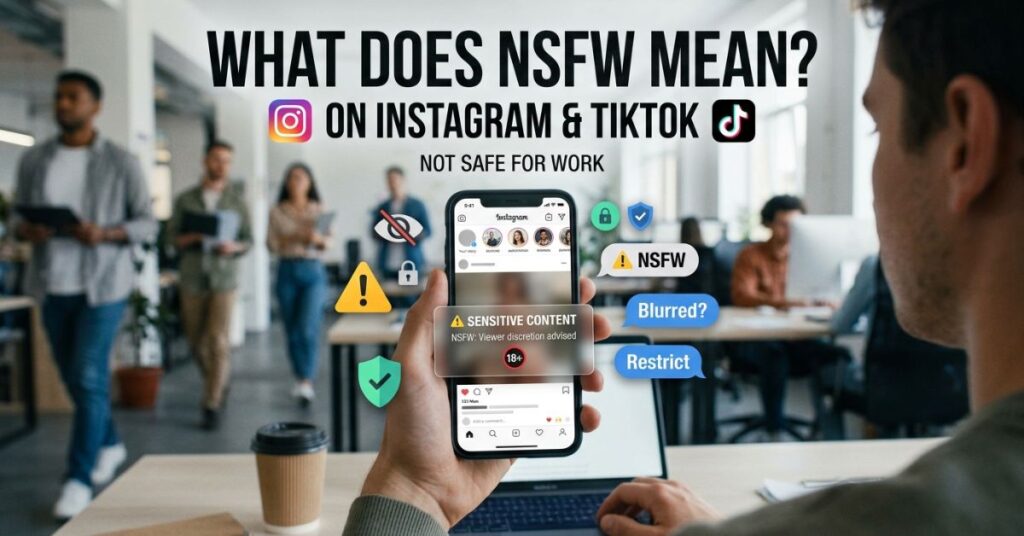
On Instagram and TikTok, NSFW works as an informal content warning. Users add it to captions, comments, messages, or descriptions when sharing potentially inappropriate material.
You might see this abbreviation before a video, picture, or story. It tells viewers that the next piece of content could contain mature themes or sensitive imagery.
Here are some common examples:
- NSFW warning for the next slide.
- This video contains NSFW language.
- Don’t open this link around your family.
- The next story includes sensitive content.
On Instagram, someone might use NSFW before sharing a suggestive picture. On TikTok, a creator might mention it when discussing mature topics.
Both platforms have their own content moderation systems and restrictions. Adding an NSFW tag doesn’t automatically prevent a post from being reviewed or removed.
The main idea stays the same across both platforms. NSFW gives viewers a heads-up before they decide to watch or read something.
What Does NSFW Mean in Dating?
In dating conversations, NSFW still means Not Safe For Work. However, it often refers to sexual messages, intimate pictures, or adult-themed discussions.
Someone might use it when asking permission to share suggestive content. Others use it to describe mature jokes or conversations they wouldn’t discuss publicly.
For example, a person on a dating app might ask whether you’re comfortable receiving NSFW messages. They’re checking your interest before starting a potentially intimate conversation.
Common dating chat examples include:
- Are you comfortable with NSFW messages?
- This conversation is getting a little NSFW.
- I don’t send NSFW pictures to strangers.
- Please ask before sharing anything intimate.
The abbreviation doesn’t automatically mean someone is flirting or expressing attraction. Context matters, especially when you’re talking to someone new.
Consent and personal boundaries matter in every dating conversation. You can accept, decline, or ask questions before receiving intimate pictures or sexual messages.
What Does NSFW Mean From a Girl?
When a girl sends NSFW in a text message, it usually means Not Safe For Work. The abbreviation doesn’t have a different definition based on the sender’s gender.
However, the surrounding conversation can help you understand why she’s using it. She might be warning you about a picture, asking permission, or discussing mature content.
For example:
- Girl: I found a funny video, but it’s NSFW.
- You: Haha, thanks for the warning. I’ll check it later.
In another situation, she might ask:
- Girl: Would you be comfortable receiving something NSFW?
- You: What kind of content do you mean?
This doesn’t automatically indicate romantic interest, flirting, or attraction. She may simply want to discuss something mature or check your comfort level.
Pay attention to her words instead of making assumptions. If she shares a boundary or asks for permission, respond respectfully.
What Does “NSFW Girl” Mean?
The phrase NSFW girl usually describes an adult woman associated with sexually suggestive or mature content. People may use it in chats, social media posts, or online discussions. However, it doesn’t have one fixed or official definition.
The meaning depends on the conversation and the content being discussed. For example, someone might use it when talking about an adult content creator, a suggestive photo, or an explicit online profile.
Example conversation:
- Alex: Who is that NSFW girl you mentioned?
- Jordan: She’s an adult creator who posts mature content.
Keep in mind that this phrase doesn’t reveal someone’s personality, private life, or intentions. Don’t assume anything about a woman based on this label alone.
What Do NSFW Pics Mean in Texting?
NSFW pics means pictures that are Not Safe For Work. When someone uses this phrase in a text message, they’re warning you that an image may contain mature or inappropriate material.
These pictures might include:
- Nude photos or sexually suggestive images.
- Graphic violence, blood, or injuries.
- Offensive pictures or disturbing imagery.
- Adult-themed illustrations or other sensitive content.
The exact meaning depends on the sender and conversation. An NSFW label helps you decide whether it’s suitable to open the picture around coworkers, family, or other people.
Example conversation:
- Alex: I found a funny picture. It’s a little NSFW.
- Taylor: Thanks for the warning. I’ll check it later.
Are NSFW Pictures Always Sexual?
No, NSFW pictures aren’t always sexual. This is one of the most common misunderstandings about the nsfw meaning in online conversations.
The label covers different types of content that might be uncomfortable or inappropriate in public settings. Sexual images are one example, but they’re not the only kind.
An image may receive an NSFW warning because it contains:
- Graphic violence or visible injuries.
- Blood or disturbing scenes.
- Strongly offensive or inappropriate material.
- Sensitive images that may upset viewers.
- Nudity or sexually suggestive content.
For example, someone might label a graphic accident photo NSFW even when it contains nothing sexual.
Example:
Jordan: Why did you mark that picture NSFW?
Alex: It shows a serious injury, so I wanted to warn people.
Does NSFW Mean Someone Is Sending Nude Photos?
Not necessarily. NSFW doesn’t automatically mean someone is sending nude photos. It simply warns that the content may be unsuitable for work or public viewing.
A message marked NSFW could contain adult humor, sexual language, graphic images, or other sensitive material. You need to understand the context before deciding what the sender means.
For example, a friend might send a warning before sharing a violent movie scene. Someone else might use it before sending an intimate picture.
Example conversation:
- Morgan: Can I send you something NSFW?
- Taylor: What kind of content is it?
- Morgan: Just a graphic movie scene.
If someone asks to send intimate pictures, remember that permission and personal boundaries matter. An NSFW warning isn’t consent to receive explicit content.
What Does NSFW Mean in Stories and Written Content?
In stories and written content, NSFW warns readers about mature or sensitive material. You’ll often see this label before an online story, article, chapter, or passage.
The content might include adult themes, sexual scenes, graphic violence, or disturbing descriptions. It doesn’t always contain pictures or videos. Written words alone can make something NSFW.
Writers and content creators use the warning to help readers make informed choices. It can also help online communities follow their content-labeling rules.
Example conversation:
- Alex: Is the new chapter NSFW?
- Jordan: Yes, it includes explicit scenes. Read it somewhere private.
An NSFW warning doesn’t replace age restrictions or platform policies. Readers should still check the content description before opening it.
What Does NSFW Language Mean?
NSFW language refers to words or expressions that may be inappropriate in professional or public settings. It usually includes strong profanity, explicit sexual language, offensive remarks, or adult humor.
You might encounter this type of language in text messages, online stories, social media comments, or videos. Someone may add an NSFW warning when a post contains words they wouldn’t use around coworkers or family members.
Common examples include:
- Strong swear words or profanity.
- Explicit sexual expressions.
- Offensive insults or slurs.
- Crude jokes and adult humor.
Example conversation:
- Taylor: The video has some NSFW language.
- Morgan: Thanks. I’ll avoid playing it around everyone.
The label depends on the audience and setting. What feels acceptable among close friends may not suit a workplace or public environment.
What Does the NSFW Tag Mean?
The NSFW tag stands for Not Safe For Work. People use it to warn others that a post, picture, video, or message contains mature or sensitive content. It helps viewers decide whether they should open something in public or wait until they’re somewhere private.
You may see this tag on social media, discussion forums, online communities, and adult-themed websites. The content could include:
- Sexual images or suggestive material.
- Graphic violence, blood, or injuries.
- Strong language or offensive jokes.
- Disturbing pictures or mature discussions.
For example:
- Alex: Why does this post have an NSFW tag?
- Jordan: It contains graphic images, so the warning helps viewers.
The tag doesn’t automatically mean content is illegal or pornographic. It simply signals that some viewers may find it unsuitable.
What Does “Almost NSFW” Mean?
Almost NSFW describes content that comes close to being inappropriate for work or public viewing. It may contain suggestive jokes, mild nudity, adult humor, or slightly revealing images. However, it usually isn’t as explicit as clearly NSFW material.
People use this phrase informally when content sits between completely safe and clearly mature. It doesn’t have an official definition or universal rating.
For example, a mildly suggestive meme might be called almost NSFW. Someone may also use the phrase to describe a joke they wouldn’t share during a formal meeting.
Example conversation:
- Taylor: Is that picture NSFW?
- Morgan: Not really. It’s almost NSFW, though.
The phrase depends on personal judgment and the audience. When unsure, consider where you’re viewing the content and who might see it.
What Does “Semi-NSFW” Mean?
Semi-NSFW means content is partly mature or slightly inappropriate for certain settings. It may include suggestive language, mild sexual references, adult jokes, or revealing images without showing anything highly explicit.
People often use this phrase to describe content that falls between SFW and fully NSFW. However, semi-NSFW isn’t an official content category. Different people may judge the same material differently.
You might encounter semi-NSFW content in:
- Social media memes and posts.
- Online stories with mild adult themes.
- Suggestive pictures or illustrations.
- Jokes containing sexual references.
Example conversation:
- Alex: Is the meme safe to open at work?
- Jordan: It’s semi-NSFW, so I’d wait until you’re alone.
The nsfw meaning still depends on context. A little caution can prevent awkward moments around coworkers or family.
What Does “No NSFW” Mean?
No NSFW means that mature, explicit, or inappropriate content isn’t allowed or wanted in a particular space. People commonly use this phrase in group chats, online communities, gaming servers, and social media discussions.
For example, a group administrator might write “No NSFW” in the rules. This tells members not to share sexual pictures, graphic videos, offensive material, or other content that breaks the group’s standards.
You may see rules such as:
- No NSFW pictures or videos.
- No explicit jokes or sexual messages.
- No graphic violence or disturbing images.
- Keep conversations suitable for everyone.
Example conversation:
- Morgan: Can I share this adult meme here?
- Taylor: Sorry, this group has a no-NSFW rule.
Always respect the community guidelines. A private chat or online server may have stricter rules than your personal social media account.
How to Reply When Someone Says NSFW
Your reply depends on what the sender means and whether you’re comfortable viewing the content. Sometimes, they’re simply giving you a warning. Other times, they may be asking permission before sharing something mature.
You can acknowledge the warning, ask what the content contains, or politely decline. You don’t need to open anything that makes you uncomfortable.
Here are some natural replies:
- Thanks for the warning. I’ll check it later.
- What kind of content is it?
- I’d rather not see that.
- Please don’t send explicit pictures.
- That’s fine, but send it privately.
Example conversation:
- Alex: I’ve got an NSFW link for you.
- Jordan: What’s in it?
- Alex: Just an adult-themed comedy clip.
- Jordan: Okay, I’ll watch it later.
A clear response helps protect your boundaries and avoids confusion.
Example 1: A Friend Shares a Link
When a friend shares an NSFW link, they may be warning you about its content before you open it. The link could lead to an adult joke, suggestive video, graphic image, or another sensitive post.
You can thank your friend for the warning or ask what the link contains. If you’re in public, at work, or around family, waiting is often the better choice.
Example conversation:
- Alex: Check out this link. It’s NSFW, though.
- Jordan: Thanks for telling me. I’ll open it at home.
You can also reply:
- Is it sexual or just graphic?
- I’ll save it for later.
- Not something I want to see right now.
A warning gives you a choice. You don’t have to open every link someone sends.
Example 2: Someone Asks Permission
Sometimes, a person uses NSFW before sharing mature content because they want to check your comfort level. They might ask whether you’re okay receiving an adult joke, suggestive image, or explicit message.
This gives you an opportunity to set personal boundaries. You can agree, ask for more details, or say no without feeling pressured.
Example conversation:
- Morgan: Can I send you something NSFW?
- Taylor: What does it contain?
- Morgan: It’s a slightly suggestive picture.
- Taylor: I’d rather not receive that. Thanks for asking.
Other possible replies include:
- Sure, as long as it’s not too explicit.
- Please describe it first.
- No, I’m not comfortable with that.
Remember, asking permission is respectful. However, an NSFW warning doesn’t replace consent, especially when intimate pictures or sexual messages are involved.
Example 3: A Community Moderator Gives a Warning
A community moderator may use NSFW when a member shares content that needs a warning or violates community guidelines. This often happens on Reddit, Discord, and other online platforms.
The moderator might ask the user to add an NSFW tag, move a post to an age-restricted channel, or remove material that breaks the rules. The exact action depends on the community’s policies.
Example conversation:
- Moderator: This image needs an NSFW warning.
- Alex: Sorry, I’ll update the post.
- Moderator: Thanks. Please check the community rules next time.
If you receive this warning, stay polite and follow the instructions. You can ask which rule applies if you’re unsure.
Moderators use these reminders to keep online spaces organized and help members avoid unexpected sensitive content.
Where Did NSFW Come From?
NSFW comes from the phrase Not Safe For Work. It developed as internet shorthand for warning people about content they shouldn’t open in professional or public settings.
As online forums, email discussions, and social communities grew, users needed quick ways to identify sensitive material. NSFW became a convenient label for links, pictures, stories, and other posts containing mature content.
Today, people use it across many digital platforms, including Reddit, Discord, Twitter/X, and messaging apps. Its meaning has also expanded beyond office environments. It can describe anything someone might avoid opening around family, coworkers, or strangers.
There isn’t one universally confirmed inventor or exact first-use date. The important point is its purpose: NSFW warns viewers before they open potentially inappropriate content.
NSFW Meaning in Urdu
The NSFW meaning in Urdu is:
کام کی جگہ پر دیکھنے کے لیے مناسب نہیں۔
It means something is not suitable to view at work or in a public setting. People use NSFW as a warning before sharing mature, explicit, or sensitive content online.
In simple Urdu, you can understand it as:
- کام پر دیکھنے کے لیے نامناسب
- عوامی جگہ پر دیکھنے کے لیے مناسب نہیں
- ایسا مواد جسے تنہائی میں دیکھنا بہتر ہو
For example, if someone sends you an NSFW picture, they’re warning you that it may contain inappropriate or sensitive material.
Example conversation:
- Ali: اس لنک پر NSFW لکھا ہے۔
- Ahmed: اس کا مطلب ہے کہ اسے کام یا عوامی جگہ پر نہ کھولو۔
The label helps you understand the content before viewing it.
Common Misunderstandings About NSFW
People sometimes assume NSFW always means pornography or nude pictures. However, the term covers many types of mature and sensitive content. Understanding its actual purpose helps you avoid confusion in chats and online communities.
Here are some common misunderstandings:
- NSFW always means sexual content: It can also describe graphic violence, disturbing images, or offensive language.
- NSFW means illegal content: The label is a warning, not a legal classification.
- Every NSFW post is age-restricted: Some platforms have separate age restrictions and content rules.
- NSFW means someone is flirting: A warning doesn’t automatically suggest romantic or sexual interest.
- An NSFW tag makes all content acceptable: Platforms and communities can still remove posts that break their policies.
- NSFW pictures always contain nudity: They may show injuries, violence, or other sensitive material.
The nsfw meaning depends on context. Always check the content, respect personal boundaries, and follow platform rules.
Frequently Asked Questions
What does NSFW mean in text?
NSFW stands for Not Safe For Work. It warns that content may be inappropriate to view publicly or professionally.
Is NSFW always sexual?
No, NSFW isn’t always sexual. It can also describe graphic violence, disturbing images, offensive language, or sensitive topics.
What does NSFW mean on Twitter?
On Twitter/X, NSFW warns users about sensitive media. Posts may contain nudity, graphic images, or other mature content.
What does NSFW mean in dating?
In dating, NSFW often refers to sexual messages or intimate pictures. However, it doesn’t automatically mean flirting or consent.
What does NSFW mean in pictures?
In pictures, NSFW warns about potentially inappropriate images. These may include nudity, suggestive content, graphic injuries, or disturbing scenes.
Is NSFW content illegal?
No, NSFW content isn’t automatically illegal. Its legality depends on the material, applicable laws, and platform rules.
Final Takeaway
Understanding the nsfw meaning helps you use the internet more carefully. NSFW stands for Not Safe For Work. It warns you about content that may be unsuitable for public places. This can include sexual images, adult jokes, graphic violence, or strong language. However, the nsfw meaning isn’t limited to adult pictures. It can also cover disturbing images and sensitive topics. You may see this label on Reddit, Discord, Instagram, and Twitter/X.
Now that you know the nsfw meaning, you can recognize these warnings in messages and online posts. Always check the context before opening unfamiliar links or pictures. Respect other people’s comfort and personal boundaries. If someone sends you NSFW content, you can ask what it contains or politely decline. Remember, the nsfw meaning is simple: it helps you avoid viewing unsuitable content at the wrong time or place.
