

Ever received a text that says GNG and felt completely lost? You’re not the only one. Online chats are full of short words and slang that can leave you guessing. But GNG is easier to understand than you might think. It’s a casual way of saying gang and often refers to close friends or your favorite group of people. It can add a friendly touch to an everyday conversation.
So, what does gng mean in texting, and why do people use it so often? You’ll usually find this slang on Snapchat, TikTok, Instagram, and WhatsApp. Friends use it in messages, comments, and group chats to show closeness or share a playful vibe. However, its tone can change with the situation. Let’s break down its meaning, common uses, and real-life examples.
GNG Meaning in Text
If someone calls you GNG in a message, they’re probably calling you their gang. The gng meaning in text is usually short for gang. People use this slang term to address friends, close friends, or their wider social circle.
In casual conversations, GNG works much like bro, fam, bestie, or crew. It can show friendship, loyalty, closeness, or a sense of belonging. You might see it in private chats, group chats, social media comments, and captions.
For example:
- “What’s good gng?” means What’s up, my people?
- “We outside tonight gng” means We’re going out together.
- “You got this gng!” means I’m supporting you.
The what does gng mean in texting question usually has a simple answer. It means gang, but the exact vibe depends on your relationship and conversation.
People often use GNG when they want to sound relaxed and familiar. It’s common in modern digital communication because short expressions make casual texting quicker.
Is GNG an Acronym?
No, GNG isn’t an acronym with a separate full form for each letter. It’s a shortened spelling of the word gang. People remove the vowel A to create a quicker typing variation.
This practice is common in internet slang and fast-typing culture. Similar expressions include short forms like TMW and other digital shorthand.
Here are a few things to understand:
- Shortened spelling: GNG represents the word gang.
- Vowel removal: It drops the vowel A from the original word.
- Typing variation: People use it instead of typing the complete word.
- Not an acronym: Its letters don’t represent separate words.
For example:
A: “You coming tonight gng?”
B: “Yeah, I’m on my way.”
Here, GNG simply addresses the other person as a friend.
Although people sometimes call it a text abbreviation, its meaning comes from the original word gang. The spelling doesn’t change its basic meaning.
What Does GNG Mean in Chat?
The gng meaning in chat is generally gang, a casual way to address someone or refer to a group of friends. When someone sends you GNG, they’re usually showing familiarity rather than making a serious statement.
Think of it as calling someone bro or fam. It creates a relaxed feeling and makes conversations sound more personal.
People commonly use GNG to:
- Address a close friend.
- Talk about their friend group.
- Show loyalty and togetherness.
- Encourage someone during a difficult moment.
- Add hype to an ordinary conversation.
- Make casual texting feel more natural.
Conversation example:
A: “I finally passed my driving test!”
B: “Let’s gooo gng 🔥”
A: “Appreciate you!”
In this conversation, GNG adds excitement and friendly support.
You might also receive it as a standalone reply. For example, someone might simply write “Bet gng” to agree with your plans.
However, always consider the context, emojis, and punctuation. These small details help you understand the sender’s actual vibe.
GNG Meaning on Snapchat, TikTok, Instagram & WhatsApp
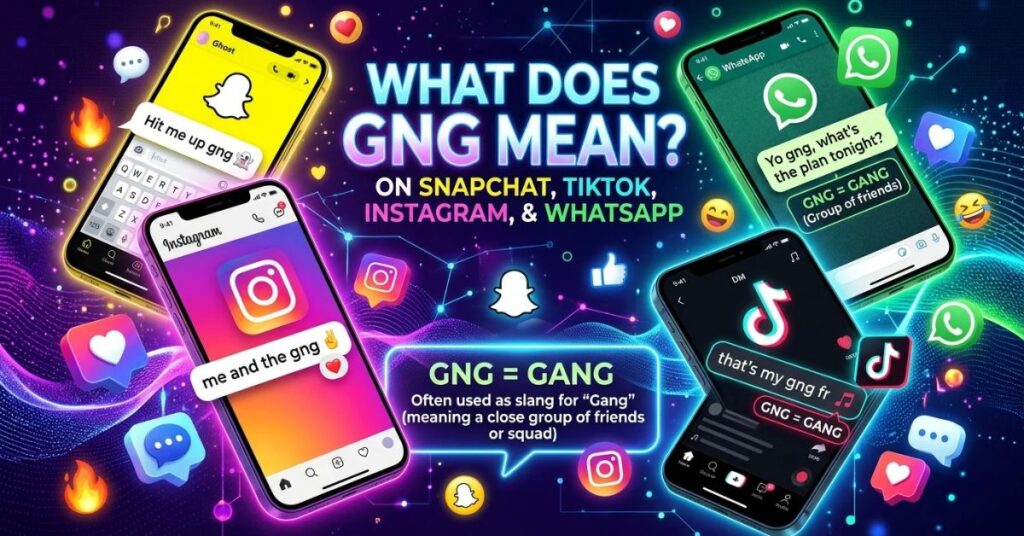
GNG generally carries the same meaning across popular social media platforms. It stands for gang and helps people address friends or familiar online communities.
However, its usage can change slightly depending on the platform. Someone might use it in a Snapchat conversation differently from a TikTok comment.
You’ll commonly encounter this text slang in:
- Snapchat: Private chats, story replies, and conversations with close friends.
- TikTok: Comments, captions, memes, and creator interactions.
- Instagram: Reels comments, direct messages, and Close Friends stories.
- WhatsApp: Personal messages and group chats.
- Discord: Gaming conversations and online communities.
- Facebook: Casual comments and messages between friends.
- SMS: Everyday text messages between familiar people.
For example:
A: “We finally won the tournament!”
B: “Big W for the gng 🔥”
Here, GNG refers to the group celebrating together.
The main meaning stays consistent across platforms. Your relationship with the sender determines whether it sounds friendly, playful, or sarcastic.
GNG Meaning on Snapchat
On Snapchat, GNG usually means gang and works as a friendly way to address someone. People use it when messaging friends, replying to stories, or chatting with their regular group.
Snapchat conversations often feel personal and relaxed. That’s why short expressions like GNG fit naturally into everyday messages.
You might see it in:
- Private chats between close friends.
- Replies to funny Snapchat stories.
- Group conversations and shared plans.
- Snaps celebrating achievements.
- Messages encouraging someone.
Conversation example:
A: “Just got my new sneakers!”
B: “Those look clean gng 🔥”
A: “Appreciate it!”
Here, GNG makes the compliment sound more casual and friendly.
You might also see someone write “Good morning gng” or “Where you at gng?” These expressions simply show familiarity.
On Snapchat, emojis can add extra meaning. A fire emoji might express hype while a laughing emoji creates a funny tone.
Remember, GNG doesn’t have a special Snapchat-only meaning. It’s the same internet slang used across other messaging platforms.
GNG Meaning on TikTok
On TikTok, GNG usually means gang and appears in comments, captions, and video replies. Users often address their followers, friends, or online communities with this slang.
TikTok comment culture has helped spread many short expressions. GNG fits naturally into meme captions, funny videos, and everyday creator interactions.
People commonly use it to:
- Address followers and online friends.
- React to funny or relatable videos.
- Celebrate shared experiences.
- Show support for content creators.
- Add hype to comments.
- Make jokes with familiar people.
Conversation example:
A: “We survived another Monday.”
B: “Barely made it gng 😭”
A: “Same energy tomorrow!”
Here, GNG creates a sense of shared experience. It makes the comment feel friendly and relatable.
You might also see captions like:
- “My gng never disappoints.”
- “Big plans with the gng.”
- “We really did that gng!”
Sometimes creators use GNG jokingly when addressing their audience. The meaning remains gang, although the tone can be playful or ironic.
GNG Meaning on Instagram
On Instagram, GNG means gang and usually refers to friends, followers, or a close social circle. People use it in direct messages, Reels comments, captions, and Close Friends stories.
The expression makes ordinary interactions feel more relaxed. It can also show appreciation when someone supports your achievements or shares exciting news.
Common Instagram uses include:
- Replying to a friend’s Reel.
- Addressing friends in photo captions.
- Commenting on someone’s achievements.
- Sharing group pictures.
- Messaging people in your close circle.
Conversation example:
A: “Finally reached 10k followers!”
B: “Proud of you gng! Keep going 🔥”
A: “Couldn’t do it without you!”
Here, GNG adds warmth and encouragement to the conversation.
You might also find captions such as:
- “Weekend memories with my gng.”
- “Nothing beats my day-one gng.”
- “Good vibes with the whole crew.”
On Instagram, the expression doesn’t necessarily refer to a literal gang. It’s usually a casual way to describe friendship and belonging.
GNG Meaning on WhatsApp
On WhatsApp, GNG generally means gang and appears in everyday conversations between friends. People use it when making plans, sharing updates, or talking inside group chats.
WhatsApp supports both personal messaging and group conversations. Therefore, GNG can address one person or an entire friend group.
You’ll commonly find it in:
- Casual text messages.
- Friends’ group chats.
- Voice message replies.
- Weekend planning conversations.
- Messages celebrating personal achievements.
- Friendly greetings.
Conversation example:
A: “Are we meeting at 8 tonight?”
B: “Yeah gng, don’t be late 😂”
A: “I’ll be there!”
Here, GNG makes the message sound familiar and relaxed.
Another example:
A: “Bro, I got the job!”
B: “That’s huge gng! Proud of you.”
The expression adds a supportive tone without changing the sentence’s main meaning.
On WhatsApp, punctuation and emojis can also influence interpretation. A simple “Okay gng” might sound friendly, while “Whatever gng…” could suggest frustration.
GNG Meaning in SMS Text Messages
In SMS text messages, GNG also means gang. It’s a casual slang expression people use when addressing friends or referring to their close circle.
Unlike social media comments, traditional SMS conversations usually involve fewer public interactions. You’ll mostly see GNG in personal messages between people who already know each other.
For example, someone might send:
- “What’s happening gng?”
- “See you later gng.”
- “We got this gng!”
- “Good luck today gng.”
Conversation example:
A: “I’m nervous about my first interview.”
B: “Don’t worry gng, you’ll do great.”
A: “Thanks for the support!”
Here, GNG adds encouragement and familiarity to the message.
However, SMS doesn’t always provide extra clues through reactions or comments. You need to understand the surrounding conversation to interpret the sender’s intention.
GNG works best in casual texting. Avoid using it in formal messages, academic assignments, or professional communication.
Tone & Context Variations of GNG
Although GNG usually means gang, its emotional meaning can change with context. The same expression might sound supportive in one conversation and sarcastic in another.
Your relationship with the sender also matters. Close friends often use GNG casually without thinking twice.
Here are some common tone variations:
- Friendly tone: Shows closeness and familiarity.
- Funny tone: Adds humor to a conversation.
- Playful tone: Creates a teasing or relaxed vibe.
- Romantic tone: Can sound affectionate between partners.
- Sarcastic tone: Expresses disbelief or mild annoyance.
- Angry or confrontational tone: Can make a message sound aggressive.
Emojis, punctuation, and surrounding words help reveal the intended meaning. Therefore, don’t judge the expression by itself.
Funny Tone
Sometimes GNG appears in conversations where friends joke about embarrassing or unexpected situations. It adds a humorous touch without changing the original message.
People often combine it with laughing emojis, exaggerated reactions, or playful comments.
Conversation example 1:
A: “I just walked into the wrong classroom.”
B: “Bro is lost again gng 😭”
Conversation example 2:
A: “I studied for five hours and forgot everything.”
B: “That’s talent gng 😂”
In both examples, GNG creates a relaxed and funny tone. The sender isn’t insulting the other person seriously.
You might also see funny captions like:
- “My gng has zero survival skills.”
- “Never letting my gng cook again.”
- “The gng makes everything complicated.”
This usage works especially well among close friends who understand each other’s humor.
Playful Tone
A playful tone makes GNG sound friendly, relaxed, and slightly teasing. People often use it when joking with friends or discussing everyday situations.
It can also make simple messages feel warmer. That’s why you’ll frequently see it in casual texting and group chats.
Conversation example 1:
A: “You forgot to invite me!”
B: “Relax gng, you’re always invited 😂”
Conversation example 2:
A: “You’re scared of that little dog?”
B: “Chill gng, it looked dangerous!”
Here, GNG adds a playful feeling to the conversation. Neither person sounds genuinely upset.
You can also use it when teasing someone about their habits or funny mistakes. However, make sure the other person understands your humor.
Romantic Tone
GNG isn’t traditionally a romantic nickname. However, some couples and romantic interests use it affectionately during casual conversations.
When someone calls you GNG, it doesn’t automatically mean they’re flirting. Their relationship with you and the surrounding conversation matter much more.
For example:
Conversation example 1:
A: “You didn’t even miss me today?”
B: “Of course I missed you gng ❤️”
Conversation example 2:
A: “Who’s your favorite person?”
B: “You already know gng 😉”
In these examples, the romantic feeling comes from the affectionate messages and emojis. GNG simply keeps the conversation casual.
If someone uses this expression while flirting, look at their other messages. Their overall behavior provides better clues than one slang word.
Sarcastic Tone
GNG can also appear in sarcastic conversations. People sometimes use it when reacting to something unbelievable, silly, or slightly frustrating.
In this situation, the expression might sound less friendly. The sender’s punctuation and choice of words often reveal their attitude.
Conversation example 1:
A: “I can finish this entire project in five minutes.”
B: “Sure gng, good luck with that 🙄”
Conversation example 2:
A: “I never make mistakes.”
B: “Of course gng, you’re perfect.”
Here, GNG adds sarcasm rather than genuine support.
A short reply like “Okay gng…” can also suggest disbelief. However, don’t assume someone is being rude without considering the complete conversation.
Angry or Confrontational Tone
Although GNG is generally harmless slang, it can appear in arguments and tense conversations. The word itself isn’t aggressive, but surrounding language can change its effect.
Someone might use it when confronting a friend or responding to an uncomfortable situation.
Conversation example 1:
A: “Why did you share my private messages?”
B: “Watch how you’re talking to me gng.”
Conversation example 2:
A: “You keep making excuses.”
B: “Listen gng, I’ve already explained everything.”
In these situations, GNG sounds more confrontational because of the surrounding words.
Pay attention to the complete message rather than focusing on one expression. A familiar slang term doesn’t always guarantee a friendly intention.
If a conversation becomes heated, respond calmly instead of matching aggressive language.
Grammar & Language Role of GNG
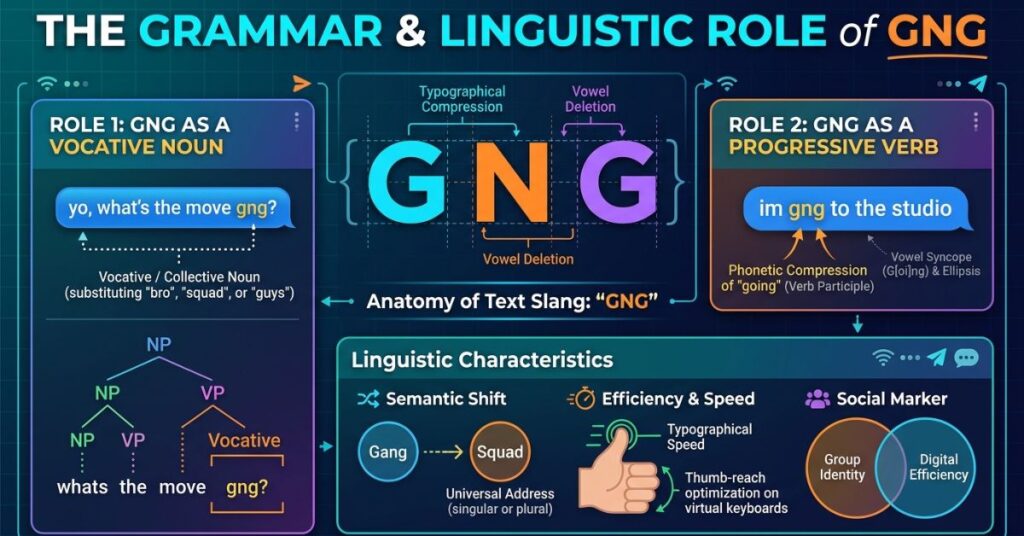
Although GNG looks like a short abbreviation, it has a clear role in everyday conversations. People use it as an informal way to address friends or describe their social circle.
The word comes from gang, but its shortened spelling makes it convenient for digital communication. It doesn’t follow a special grammar rule or change the meaning of an entire sentence.
When someone asks what does gng mean in texting, understanding its language role helps explain how people use it naturally.
Here are the main grammatical features:
- It works as a noun when referring to a friend group.
- It acts as a form of address when speaking to someone.
- It usually appears in informal language.
- It can stand alone as a casual response.
- It doesn’t replace the main meaning of a sentence.
Part of Speech
GNG usually functions as a noun because it represents the word gang. In this sense, it describes a group of friends, companions, or people who share a connection.
However, people also use it as a form of address. It’s similar to calling someone bro, fam, or bestie.
Examples:
- “My gng is always there for me.”
- “What’s up gng?”
- “We going out tonight, gng?”
In the first example, GNG refers to a friend group. In the other examples, it directly addresses someone.
Its part of speech depends on how you use it. The surrounding words help determine its grammatical role.
Sentence Role
GNG doesn’t have one fixed position in a sentence. People place it wherever it sounds natural during casual conversations.
You can use it at the beginning, middle, or end of a message. It can also appear alone as a standalone reply.
Here are some common sentence patterns:
- Beginning: “Gng, listen to this crazy story.”
- Middle: “I told you, gng, this would happen.”
- Ending: “You’re doing great, gng.”
- Standalone: “Bet, gng!”
Conversation example:
A: “I’m thinking about changing my hairstyle.”
B: “Go for it gng!”
Here, GNG appears at the end and makes the advice sound friendly.
You don’t need complicated grammar to use it. Just place it naturally when addressing someone.
Does It Replace a Full Sentence?
No, GNG doesn’t usually replace a complete sentence. It works more like a conversational expression that adds familiarity or emotion to your message.
For example, saying “Good job, gng” still communicates praise. Removing GNG doesn’t change the main message.
However, people sometimes send it alone in casual chats.
Conversation example:
A: “We finally won the championship!”
B: “GNG 🔥”
Here, the reply expresses excitement and shared enthusiasm. The sender relies on the previous message to make their meaning clear.
GNG can also appear in short reactions such as:
- “Bet gng.”
- “Facts gng.”
- “Say less gng.”
These expressions work because both people understand the conversation.
Formal vs Informal Usage
GNG belongs to informal language and works best in relaxed conversations. It’s suitable when messaging friends, siblings, or people who understand your texting style.
However, it doesn’t fit every communication setting. Using slang in a formal situation might make your message seem unprofessional.
Informal situations:
- Personal text messages.
- Snapchat conversations.
- Instagram DMs.
- Friends’ group chats.
- Casual Discord discussions.
Formal situations to avoid:
- Job applications.
- Business emails.
- Academic assignments.
- Official documents.
- Professional Slack messages.
For example:
- Casual: “Thanks for helping me, gng!”
- Formal: “Thank you for your help. I really appreciate it.”
The second version works better in professional settings. Always consider your audience before using internet slang.
Tone Impact
A small expression can change how a message feels. GNG often makes conversations sound warmer, more relaxed, and more familiar.
It can also add humor or hype when friends discuss exciting moments. However, the same word might sound sarcastic during an argument.
Your tone usually depends on three things:
- Relationship: Close friends use GNG more naturally.
- Context: Friendly conversations create a warmer meaning.
- Punctuation and emojis: These details can change the message’s vibe.
Conversation example:
A: “I finally got the promotion!”
B: “Proud of you gng! 🔥”
Here, GNG adds a supportive tone.
Compare that with:
A: “I didn’t break your headphones.”
B: “Sure gng…”
The second message sounds doubtful or sarcastic. Context makes all the difference.
How to Reply When Someone Says “GNG”
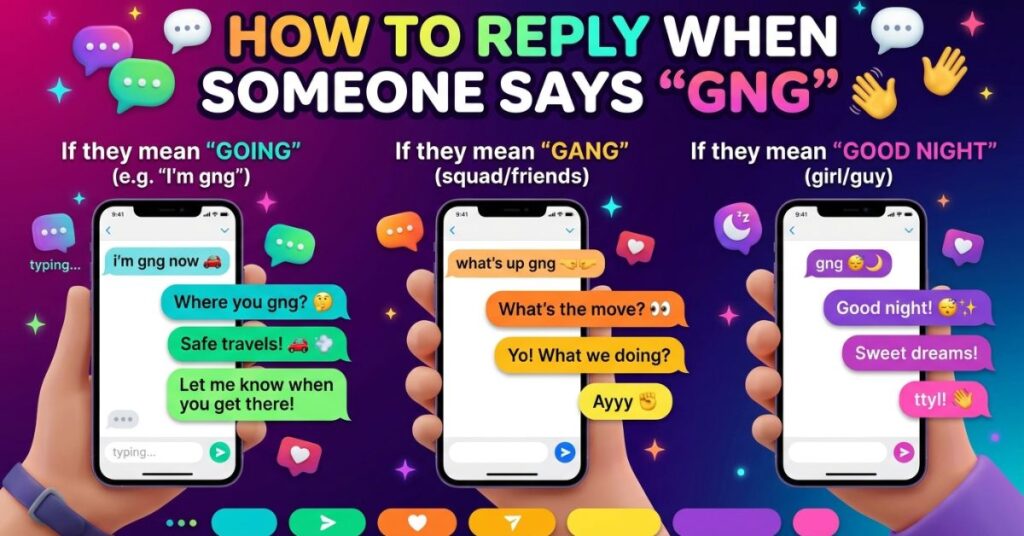
Getting a message that says GNG doesn’t require a complicated response. Most of the time, the sender is simply addressing you as a friend or showing familiarity.
The best response depends on your relationship and the conversation. You can keep things funny, serious, flirty, or completely neutral.
If someone calls you GNG, you can respond naturally without using slang yourself.
Here are some useful replies for different situations.
Funny Replies
If your friend uses GNG while joking around, a funny response can keep the conversation entertaining. You don’t need a serious answer when both people are having fun.
Try these funny replies:
- “Who gave you permission to call me that? 😂”
- “Your favorite gng has arrived.”
- “I’m the main character, gng.”
- “Stop exposing me like that.”
- “The gng never misses.”
- “You need professional help, bro.”
Conversation example:
A: “What’s happening gng?”
B: “Just being legendary as usual 😂”
A: “Someone’s feeling confident!”
These replies work well in Snapchat chats, Instagram DMs, and WhatsApp group conversations.
Serious Replies
Sometimes GNG appears in a serious conversation. Someone might use it while offering support, discussing personal problems, or sharing important news.
In these situations, respond with sincerity. You don’t have to match every slang expression.
Here are some serious replies:
- “I appreciate you being there.”
- “Thanks for always supporting me.”
- “I hear you.”
- “We’ll figure things out.”
- “I understand what you mean.”
- “That really means a lot.”
Conversation example:
A: “Don’t give up gng. You’ve worked hard.”
B: “Thanks. I really needed to hear that.”
A genuine response keeps the conversation meaningful. It also shows that you value the other person’s support.
Flirty Replies
When someone you’re interested in calls you GNG, you can respond playfully. However, remember that GNG alone doesn’t necessarily signal romantic interest.
If the conversation already feels flirty, try these responses:
- “Only your favorite person 😉”
- “You’re making me blush.”
- “Anything for you.”
- “You always know what to say.”
- “Am I your favorite gng?”
- “Stop being so sweet.”
Conversation example:
A: “You looking good today gng.”
B: “Only because you noticed 😉”
A: “I always notice.”
These replies add a little romance without making things awkward. Choose one that matches your comfort level and relationship.
Neutral Replies
Not every conversation needs a funny or flirty response. Sometimes, a simple answer works perfectly well.
Neutral replies are useful when someone casually addresses you as GNG. They’re also helpful when you don’t want to use much slang.
Try these common responses:
- “Bet.”
- “Facts.”
- “Say less.”
- “For sure.”
- “Alright.”
- “Got it.”
- “Sounds good.”
Conversation example:
A: “See you at 7 gng.”
B: “For sure!”
A: “Don’t be late.”
These responses keep things simple and natural. The easiest approach is to match their tone without forcing slang into every message.
Is GNG Rude or Bad?
Seeing GNG in a message doesn’t usually mean someone is insulting you. It’s generally harmless slang used between friends and familiar people.
The expression itself is not profanity or an offensive word. Most people use it to show friendship, closeness, or belonging.
However, context can change how it sounds. Someone might use GNG sarcastically or aggressively during an argument.
Consider these examples:
- Friendly: “What’s up gng?”
- Supportive: “You got this gng!”
- Sarcastic: “Sure gng, whatever you say.”
- Confrontational: “Listen gng, that’s enough.”
The word stays the same, but the emotional meaning changes.
Is GNG Rude?
No, GNG isn’t rude by default. It’s a casual way to address friends or refer to a group of people you feel connected to.
It isn’t profanity and doesn’t carry an offensive meaning in ordinary texting. Many people use it just like bro or fam.
However, certain situations can make it sound disrespectful.
For example:
- Using it sarcastically during an argument.
- Pairing it with aggressive or insulting language.
- Calling someone GNG when they dislike informal nicknames.
- Using it in a mocking or dismissive way.
Conversation example:
A: “Why didn’t you tell me about the meeting?”
B: “Relax gng, I forgot.”
Depending on their relationship, this could sound playful or dismissive.
Therefore, consider the person’s feelings and the situation before judging the expression.
Can You Use It in School?
Yes, you can use GNG when chatting with friends at school. It’s common in casual conversations, text messages, and student group chats.
Students might use it when discussing homework, sharing jokes, or making plans after classes.
For example:
A: “Did you finish the science assignment?”
B: “Almost done gng. What about you?”
A: “Still working on it.”
However, school use depends on the situation. Talking with friends is different from communicating with teachers.
Avoid using GNG in:
- Formal classroom presentations.
- Academic assignments.
- Official school emails.
- Messages to teachers or administrators.
For school friends, it’s usually fine. For academic communication, choose clear and respectful language instead.
Can You Use It at Work?
GNG usually doesn’t belong in professional settings. Although coworkers might use it casually, the expression can sound too relaxed in formal business communication.
Think about your audience before adding internet slang to workplace messages. A close colleague might understand it while a manager prefers professional wording.
Casual workplace conversation:
A: “We finished the presentation!”
B: “Great work gng!”
This might feel natural between close coworkers.
Professional communication:
Instead of writing:
“Thanks for the update gng.”
Write:
“Thanks for the update. I appreciate your help.”
Avoid GNG in:
- Business emails.
- Formal reports.
- Client conversations.
- Official workplace announcements.
- Professional Slack messages.
You can use casual language with trusted colleagues. However, clear wording works better for important professional communication.
Who Uses GNG?
GNG appears in everyday conversations among people who enjoy internet slang and casual texting. It’s especially familiar in online communities where short expressions help create a shared sense of belonging.
People use it to address friends, followers, gaming teammates, and members of their social circles.
You’ll commonly encounter GNG among:
- Friends who regularly exchange text messages.
- Social media users.
- Online gaming communities.
- People who enjoy meme culture.
- Members of group chats.
- Creators interacting with their followers.
However, slang doesn’t belong to one specific age group or location. People adopt expressions through friends, music, social media, and online communities.
Age Group
GNG is particularly familiar among Gen Z and younger millennials. These groups often use shortened expressions when chatting online or posting social media comments.
However, that doesn’t mean older adults cannot understand or use it. Anyone who spends time around internet slang might recognize the expression.
Different age groups may use it in different ways:
- Gen Z: Often uses GNG in comments, memes, and casual conversations.
- Younger millennials: May use it when chatting with friends or online communities.
- Older adults: Might recognize it through younger family members or social media.
Conversation example:
A: “You coming to the party gng?”
B: “Of course! Wouldn’t miss it.”
The expression reflects casual communication rather than a strict age-based language rule.
Regions
GNG appears across different English-speaking communities. Its use connects with the broader popularity of the word gang as a casual reference to friends or a group.
You might encounter it in the United States, the UK, and urban slang communities.
Social media has also helped spread the expression across the global English-speaking internet.
However, its popularity can vary between communities. Not everyone uses the same slang, even when they speak the same language.
For example:
- United States: GNG appears in casual texting and online conversations.
- UK: Some younger internet users recognize and use similar slang.
- Urban slang communities: Gang-related expressions often appear in casual speech and online culture.
- Global online communities: People encounter GNG through videos, memes, and comments.
The meaning usually remains gang, although local communication styles can influence its tone.
Most Popular Platforms
GNG doesn’t belong to one particular social media platform. People use it across messaging apps, entertainment platforms, and online communities.
Its short spelling makes it convenient for quick replies and casual conversations.
Here are some places where you might see it:
| Platform | Common Usage |
| Snapchat | Private chats and story replies |
| TikTok | Comments, captions, and memes |
| DMs, Reels comments, and stories | |
| Personal messages and group chats | |
| Discord | Gaming conversations and community chats |
| Casual posts and friend interactions | |
| SMS | Everyday text messages |
For example, someone might comment “Big W gng 🔥” under a friend’s achievement.
The platform doesn’t change the basic definition. It simply provides another place for people to use familiar internet slang.
Origin & Internet Culture
The origin of GNG connects with the word gang, which people have used to describe groups of friends, companions, or close associates.
Over time, the word became common in different forms of urban slang. Its influence also spread through rap culture and hip-hop culture.
As digital communication grew, people began shortening familiar words. Removing vowels became one way to type faster and create compact expressions.
That’s how GNG became a recognizable typing variation of gang in online conversations.
Several cultural influences helped its visibility:
- Urban slang: Casual uses of gang helped shape its social meaning.
- Rap culture: Music helped spread group-related expressions.
- Hip-hop culture: Artists and communities popularized familiar forms of address.
- TikTok comment culture: Short reactions helped expressions circulate online.
- Meme captions: Users adopted GNG in funny and relatable posts.
- Influencer speech patterns: Online creators helped introduce slang to wider audiences.
However, the exact origin of the shortened spelling GNG isn’t clearly documented. It’s better to distinguish the older word gang from its modern digital spelling.
Today, GNG reflects modern digital communication. People use it to show familiarity, friendship, and shared identity without typing a longer expression.
Comparison Table: GNG vs Similar Slang
Internet slang includes many short expressions that look similar but serve different purposes. Some address friends while others communicate feelings, opinions, or reactions.
GNG is different because it usually refers to a friend group or works as a friendly form of address.
Here’s how it compares with other familiar expressions:
| Slang | Full Form / Meaning | Common Usage |
| GNG | Gang | Addressing friends or a group |
| IDK | I Don’t Know | Expressing uncertainty |
| ION | I Don’t | Shortening a casual statement |
| Dunno | Don’t Know | Informal way to express uncertainty |
| IDC | I Don’t Care | Showing indifference |
| SYBAU | Shut Your Bitch Ass Up | Rude or insulting slang |
| ARD | Alright | Showing agreement |
| TYSM | Thank You So Much | Expressing gratitude |
| Bro | Brother | Addressing a friend |
| Fam | Family | Referring to close friends |
| Bestie | Best Friend | Addressing a close friend |
Example conversations:
A: “Are you coming with us?”
B: “IDK yet.”
Here, IDK expresses uncertainty.
A: “We won the match!”
B: “Big W for the gng!”
Here, GNG refers to the friend group.
A: “Thanks for helping me.”
B: “No problem!”
TYSM would express gratitude in the opposite direction.
The main difference: GNG addresses people rather than expressing an opinion or describing an emotion. Its confusion risk usually comes from unfamiliarity with internet slang rather than complicated grammar.
Real-World Usage Insight
In real conversations, GNG usually appears naturally rather than as a carefully chosen expression. People use it when talking with friends, celebrating achievements, joking around, or making plans.
It often creates a feeling of belonging. Calling someone GNG can make them feel included in your close circle.
However, the expression doesn’t always describe an actual group. Sometimes, one person uses it simply to address another person.
Here are a few everyday situations:
- Making plans: “Where we meeting tonight gng?”
- Celebrating success: “You finally did it gng!”
- Showing support: “Keep pushing gng, you’re almost there.”
- Sharing jokes: “My gng never learns 😂”
- Starting conversations: “What’s good gng?”
Conversation example:
A: “I got accepted into my dream university!”
B: “That’s amazing gng! You deserve it.”
A: “Thanks! Couldn’t be happier.”
The expression adds excitement and warmth without changing the message.
Ultimately, understanding GNG is less about memorizing slang rules and more about reading the situation. Pay attention to the sender, their relationship with you, and the surrounding words. That makes its meaning much easier to understand.
Frequently Asked Questions About GNG
What Does GNG Mean in Text Messages and Online Chat?
GNG usually means gang, a casual way to address friends or close groups.
If you wonder what does gng mean in texting, it shows friendship and closeness.
What Does GNG Mean on Snapchat and TikTok?
On Snapchat and TikTok, GNG often means gang or close friends.
People use it in captions, comments, and messages to sound friendly.
Is GNG Rude, Disrespectful, or Harmless Slang?
GNG is generally harmless slang, not profanity or an insult.
However, its tone may sound rude when used sarcastically or aggressively.
How Should You Reply When Someone Says GNG?
Match their tone and keep your reply natural.
You can say Bet, Facts, Say less, or For sure.
Is GNG the Same as IDK or Different?
GNG usually means gang, while IDK means I don’t know.
They have different meanings and serve different purposes in chats.
Can You Use GNG in School or Work?
You can use GNG with friends in casual school or work chats.
Avoid it in formal emails, assignments, and professional communication.
Final Thoughts: When to Use GNG (And When to Avoid It)
Understanding what does gng mean in texting is simple once you know the slang. GNG usually means gang. People use it to address friends, close groups, or people they trust. You may see it on Snapchat, TikTok, Instagram, and WhatsApp. Many people search it when slang feels confusing. Now you know its meaning and how people use it.
Remember, the meaning of GNG can depend on the conversation. It often sounds friendly, playful, or supportive. Still, the tone may change if someone uses it sarcastically or angrily. You can reply with words like Bet, Facts, or For sure. Use GNG with friends in casual chats, but avoid it in formal writing. Whenever you see GNG, check the context to understand the message. Knowing what does gng mean in texting helps you follow online conversations with confidence. That makes chatting easier.
