

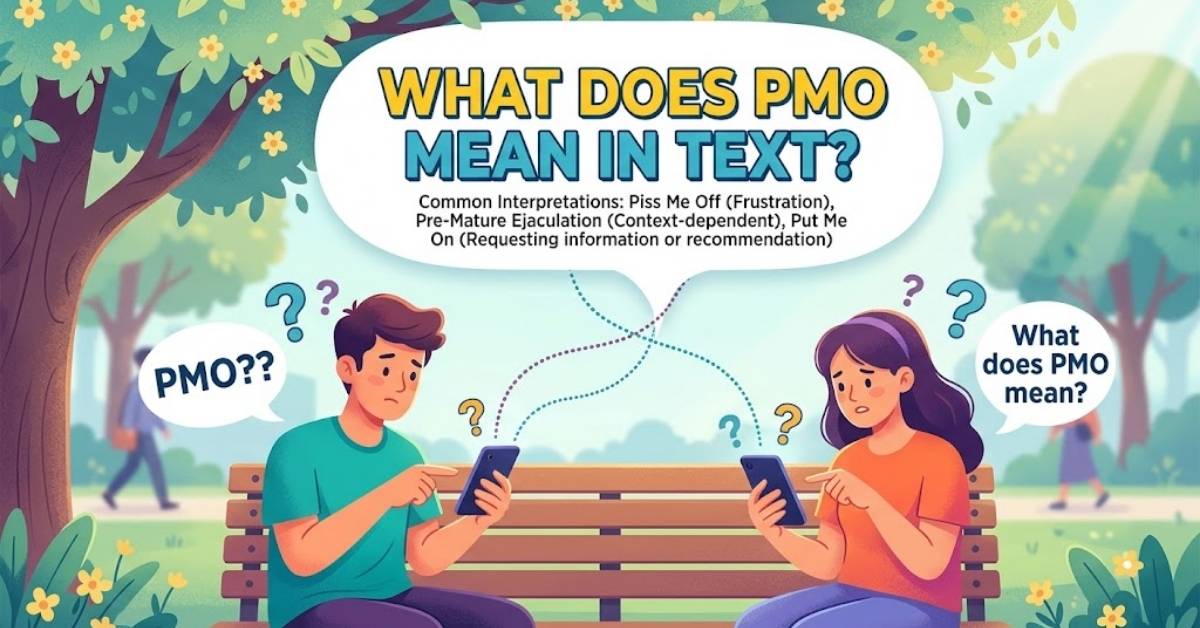
Someone texts “this traffic PMO” and you stare at the screen. Is it an insult? A joke? Something from work?Here’s the short answer. PMO meaning in text is most often “piss me off,” a blunt way to say something annoys you.
In some chats it means “put me on,” which is a request for a tip, a recommendation, or an introduction.Context decides which one you’re reading. This guide walks through both meanings, shows real examples, and tells you how to reply without making things awkward.
Meaning & Definition
The PMO definition most people search for is “piss me off.” It’s an internet slang abbreviation that signals irritation, annoyance, or strong frustration.
Think of it as a loud sigh typed in three letters. “That comment PMO” tells the other person you’re bothered, and it does that in about a second.
Because it contains a swear word, it counts as rude language in most settings. Close friends shrug it off. A teacher, a client, or your grandmother probably won’t.
What Does PMO Meaning in Text?
When you see PMO in texting, check three things first. Who sent it, what came right before it, and what mood the chat is in.
If the message follows a complaint, it almost always means “piss me off.” If it follows a question about music, shows, or job leads, it likely means “put me on.”
Here’s a quick example. “You always PMO me when you’re late” is an emotional reaction. “PMO to some good podcasts” is a friendly ask. Same letters, very different energy.
Background / Origin

Nobody can point to the first person who typed PMO. Like most texting abbreviations, it grew out of early online chat culture, where people shortened common phrases to type faster.
The phrase “piss me off” is much older than the abbreviation. Chat rooms, forums, and gaming chats turned it into three letters because speed mattered during a match or a heated thread.
“Put me on” has a separate story. It’s popular in hip hop circles, where it describes someone introducing you to new music, a scene, or an opportunity. Social platforms later shortened it too, which is why the two meanings now overlap.
I’m not going to invent a date or a viral post here. Slang rarely has a clean birth certificate, and anyone claiming one deserves a raised eyebrow.
Usage in Different Contexts
PMO shifts depending on where you read it. A group chat with friends treats it differently than a work thread or a comment section under a viral video.
Two angles matter most: how often people use it day to day, and how formal the setting is.
General Usage
In everyday chats, people use PMO to vent emotions in a quick, casual way. It shows up after bad traffic, a cancelled plan, a rude reply, or a glitchy phone.
It also works as playful frustration. A friend who says “you PMO with those puns” is usually joking, and the smiley that follows gives it away.
Watch for these common patterns:
- Venting about situations: “This weather PMO.”
- Calling out a person: “That comment PMO.”
- Asking for a rec: “PMO to a good gym playlist.”
Formal vs Informal Usage
PMO is an informal slang expression. It belongs in casual communication, not in emails, reports, or anything a manager might read.
In professional communication, you’d say “I’m frustrated by the delay” or “that’s concerning.” Those lines keep the same message with a neutral formal tone.
One twist exists. Inside offices, PMO can also mean Project Management Office, so a formal message with those letters likely refers to a team, not a feeling.
PMO Meaning on Social Media Platforms
Each app has its own rhythm, so the same three letters can land differently. Here’s how it plays out on the big ones.
WhatsApp: In private chats, PMO usually means “piss me off.” People use it for quick venting, often with a laughing or angry emoji.
Snapchat: You’ll spot it in Snapchat story replies and fast streak chats. It’s short, so it fits the app’s speed.
Instagram: In Instagram DMs, PMO often shows up after a reel or a story that someone found irritating or dramatic. In comments, it can also mean “put me on” under music or fashion posts.
TikTok: TikTok comments use PMO under funny videos and dramatic videos. It reads as a reaction, sometimes sincere, sometimes just for effect.
Twitter / X: On X, formerly Twitter, character limits push people toward abbreviations. PMO appears in rants, quote posts, and short threads.
If you’re unsure which meaning applies, scroll up. The surrounding messages almost always settle it.
Other Meanings in Different Fields
Slang isn’t the only home for these letters. In the workplace, Project Management Office is a well known term in corporate environments and information technology (IT).
A PMO team sets standards, tracks projects, and keeps deadlines on course. If your manager says “send it to the PMO,” nobody’s annoyed. They want a document filed.
In government settings, the letters can stand for Prime Minister’s Office. Some technical abbreviations in other specialist fields use the same three letters too, so check the source before you assume.
The takeaway is simple. Multiple meanings of PMO exist, and meaning based on context is the only reliable rule.
Examples of PMO Meaning in Text in Sentences
Seeing it in action helps more than any definition. Here are PMO usage examples from realistic chats.
Annoyance meaning (“piss me off”):
- “You really PMO when you leave dishes in the sink.”
- “This traffic PMO, I’ve been stuck for forty minutes.”
- “That comment PMO. Who says that to a stranger?”
- “You always PMO me with last minute changes.”
Request meaning (“put me on”):
- “PMO to some good horror movies.”
- “Anyone PMO to a decent barber in town?”
Work meaning (Project Management Office):
- “Please share the status report with the PMO by Friday.”
Notice how the second and third groups sound totally different from the first. That’s your clue that PMO in different contexts needs a quick read of the room.
Common Misconceptions
A lot of people assume PMO always means anger. It doesn’t. Context dependent abbreviations like this one trip up even regular texters.
Another myth says PMO is always an attack on you. Often it targets a situation, like rain or a laggy game, and has nothing to do with the person reading.
Some folks also think it’s harmless because it’s short. The swear word still sits underneath, so offensive slang rules apply when you aren’t sure who’s reading.
Finally, don’t assume every older colleague knows it. Misunderstood slang causes more awkward moments than the slang itself.
Similar Terms & Alternatives
If PMO feels too strong, plenty of other expressions get the point across. Some are milder, some are louder.
- SMH (Shaking My Head): a quiet sign of disapproval
- WTF: a stronger burst of shock or anger
- Ugh: a soft, sound based groan
- Annoying, irritated, frustrated: plain words that work anywhere
For formal alternatives to slang, try “that really bothered me” or “I’m not thrilled about that.” They keep your point and drop the edge.
Curious about other texting shorthand? Related guides cover FBGM meaning in text, WTE meaning in text, and WGY meaning in text, which pair well with this one if you’re building your slang vocabulary.
How to Respond to PMO Meaning in Text When Someone Uses It
Your reply depends on what the sender meant. First, figure out if they’re venting, joking, or asking for a recommendation.
If someone’s venting, a calm response works best. Try “What happened?” or “That sounds frustrating.” Short and warm beats a lecture.
If it’s playful, match the mood. “Relax bro” or “Not gonna lie, I’d be annoyed too” keeps things light.
If it’s a “put me on” request, just answer. Share your favorite song, show, or contact, and ask what they like so you can tailor it.
Here’s a simple cheat sheet:
| Situation | Good reply |
| Real frustration | “I understand. That’s annoying.” |
| Playful teasing | “Ha, relax. I’ll make it up to you.” |
| Late night rant | “Want to talk it through?” |
| Recommendation ask | “Try this one. You’ll love it.” |
Difference Between PMO Meaning in Text and Similar Terms
People mix up PMO with other short reactions all the time. The differences are small, but they change the tone of your message.
| Term | Tone | Strength | Best setting |
| PMO | Blunt, edgy | Strong | Close friends |
| SMH | Disappointed | Mild | Most chats |
| Annoyed | Neutral | Mild | Anywhere |
| Frustrated | Neutral | Medium | Casual and semi formal |
| WTF | Shocked, loud | Strong | Close friends |
PMO versus SMH: SMH shows quiet disapproval and rarely offends anyone. PMO says you’re actually bothered, and it sounds sharper.
PMO versus annoyed: “Annoyed” is a plain word you can use at work. PMO carries strong frustration slang energy and a swear word underneath.
Relevance in Online Conversations & Dating Apps
On dating apps, PMO tends to show up as playful annoyance or a teasing complaint. “You PMO with those slow replies” can be flirty if the tone is warm.
It can also backfire. Early in online dating conversations, a stranger might read it as rude, so most people skip it until they know each other better.
In online communities and gaming conversations, PMO fits right in. Players use it after a lag spike, a lost round, or a teammate who ignored the plan.
You’ll also see it in social media comments under relatable content and dramatic videos. It works as a quick, shared eye roll in modern internet culture.
Is PMO Still Popular in 2026?
PMO hasn’t vanished, but it isn’t the loudest slang on the block either. Newer terms come and go faster than people can keep track of.
Still, it sticks around because it’s short, clear, and easy to type. Digital communication rewards that kind of efficiency.
If you’re writing for older audiences or professional readers, expect blank stares. Younger audiences and gamers recognize it more readily.
Tips Before You Use PMO
Slang can sting if you aim it wrong. A few habits help you avoid trouble.
- Know your audience: Friends are fine. Bosses and new contacts aren’t.
- Watch your tone: Add an emoji or a joke if you’re playful.
- Skip it in writing that lasts: Emails and group announcements get forwarded.
- When in doubt, spell it out: “That annoyed me” never fails.
Good communication etiquette means picking the version your reader will understand. Audience awareness beats being clever.
Conclusion
PMO usually means “piss me off,” a quick way to show annoyance in chats. It can also mean “put me on” or Project Management Office, depending on where you meet it.Read the context, think about your audience, and pick a reply that fits the mood.
When the setting is formal, choose plainer words.Got a PMO story from your own chats? Drop it in the comments and share this guide with someone who keeps asking what it means.
FAQs
What does PMO mean in text?
It most often means “piss me off,” a casual way to show you’re annoyed. In some chats it means “put me on.”
Is PMO a bad word?
It isn’t a swear word by itself, but it stands for one. Treat it as offensive language around people you don’t know well.
Is PMO formal?
No. It’s informal slang, so keep it out of emails, reports, and professional messages.
Where is PMO used?
You’ll see it in WhatsApp, Snapchat, Instagram, TikTok, X, gaming chats, and dating app messages.
Does PMO have other meanings?
Yes. It can mean “put me on,” Project Management Office, or Prime Minister’s Office, depending on context.
Should I use PMO in messages?
Use it with close friends who get your humor. Skip it at work or with strangers, and choose a milder phrase instead.
