

Ever received a message saying I miss you sm and wondered what those two letters mean? You’re not alone. Short texting abbreviations can leave anyone guessing. SM is one of those terms that can carry different meanings depending on the conversation. Most commonly, it stands for So Much. People use it to express love, excitement, appreciation, or strong feelings without typing extra words.
But there’s more to sm meaning than casual texting. In social media discussions, SM often means Social Media. In other situations, it may refer to Stage Manager or Send Message. So, how do you know which meaning someone intends? The secret is context. This guide breaks down its meanings, origins, and everyday uses. You’ll also find real chat examples, related slang terms, and easy replies to help you understand SM whenever it appears.
Origin and Cultural Footprints

The sm meaning in text developed alongside the growing popularity of online messaging and texting abbreviations. During the SMS era of the early 2000s, people wanted faster ways to communicate. Short forms helped them save time and type fewer characters.
SM became a convenient texting abbreviation for So Much. People started using it to express strong feelings without writing longer sentences. For example, I miss you SM sounds casual and affectionate.
As digital communication changed, SM gained another popular meaning: Social Media. Marketers, content creators, and everyday users began using it in conversations about online platforms.
Today, SM remains part of modern abbreviation culture. Its origin and cultural footprint show how compressed language can carry different meanings.
Other Meanings of SM
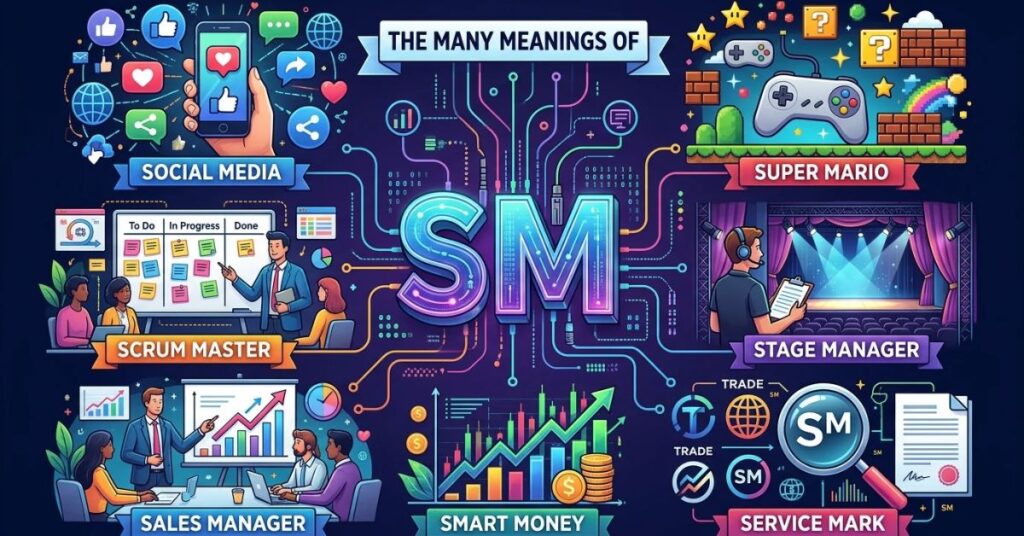
Although sm meaning usually refers to So Much in casual texting, these two letters have several other definitions. The intended meaning depends on the conversation and topic.
Here are some common alternative meanings:
- So Much: An emotional intensifier used to express strong feelings.
- Social Media: A common shorthand used in marketing and online discussions.
- Send Message: Sometimes used in technical interfaces and automated systems.
- Stage Manager: A theater professional responsible for coordinating performances.
- Sadomasochism: A term used in adult, psychological, and relationship discussions.
- SM Entertainment: A South Korean entertainment company associated with EXO, NCT, and aespa.
For example:
Friend: I miss you SM!
Marketing colleague: We need a better SM strategy.
Both messages use SM differently. Context helps you understand the intended definition.
Why Does SM Have So Many Different Definitions?
Two-letter abbreviations often carry multiple definitions because different communities use the same shorthand. SM is a good example of this language pattern.
The sm meaning changes depending on the topic, platform, and people involved. Casual texters might use it for So Much. Meanwhile, marketers often use it for Social Media.
Several factors explain this overlap:
- Short length: Two-letter abbreviations are easy to reuse.
- Abbreviation culture: Different industries develop their own shorthand.
- Digital communication: Messaging apps encourage quick expressions.
- Professional language: Teams create abbreviations for everyday tasks.
- Online communities: Fan groups and internet users develop unique meanings.
For example, a theater professional might discuss the Stage Manager. A K-pop fan might mention SM Entertainment.
The letters stay the same, but their meanings change. That’s why context matters.
Does SM Mean the Same Thing Outside the US?
The sm meaning doesn’t change completely across countries. However, its popularity and interpretation can depend on local communication habits.
In English-speaking countries, people commonly understand So Much as a casual texting intensifier. You’ll encounter similar usage in the United States, United Kingdom, Australia, and Canada.
Social Media also remains a familiar abbreviation in international marketing conversations.
Consider these regional contexts:
- United States: Friends commonly use SM in casual text messages.
- United Kingdom: People may use it in informal conversations and online discussions.
- Australia: Casual texters use abbreviations to keep messages short.
- Canada: Both So Much and Social Media appear in digital communication.
SM Entertainment also has global recognition among K-pop fans. Its connection to South Korea makes it familiar across international fan communities.
Still, never assume every person understands SM identically. The surrounding conversation provides the best clues.
Who Uses SM Most?
SM appears in different communities because each group has its own communication habits. Casual texters often use it to express emotions. Professionals may prefer it when discussing Social Media.
Here’s how different groups commonly use the abbreviation:
| Group | How They Use SM |
| Casual texters | Expressing feelings with So Much |
| Gen Z | Adding emphasis to casual messages |
| Marketers | Discussing social media strategy |
| Content creators | Talking about platforms and video content |
| Theater professionals | Referring to the Stage Manager |
| K-pop fans | Discussing SM Entertainment |
| Customer service teams | Occasionally using technical shorthand |
For example:
Friend: I love this song SM!
Marketing colleague: Our SM campaign needs more video content.
K-pop fan: SM Entertainment has some amazing artists.
As you can see, different communities use SM for different reasons.
Real Conversation Examples Using SM
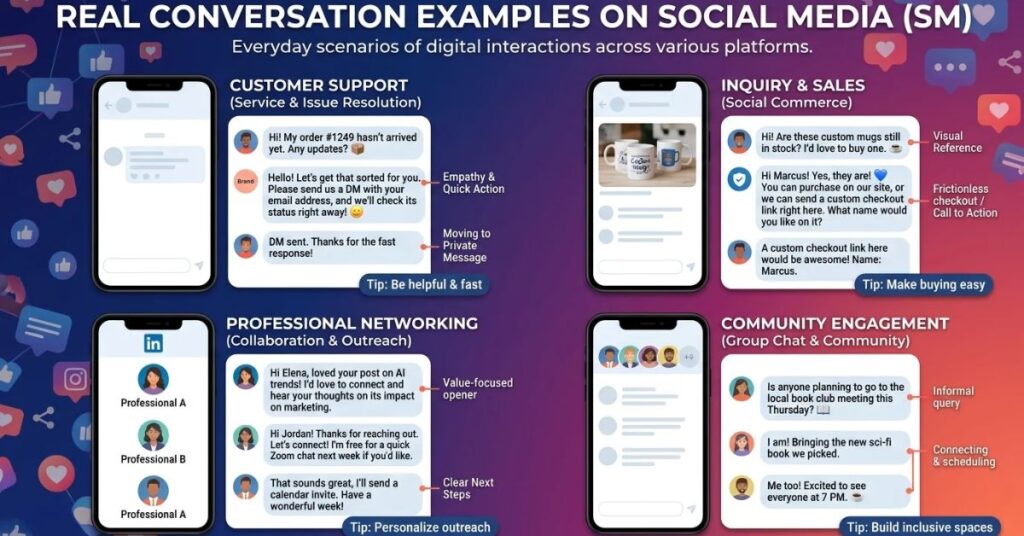
Real messages make the sm meaning easier to understand. In casual texting, people usually use it to express strong feelings or reactions.
Here are some everyday examples:
Example 1: Missing a Friend
Alex: I miss you SM!
Jamie: I miss you too. Let’s meet this weekend.
Example 2: Expressing Love
Mia: I love this picture SM.
Sara: Same! We look so happy together.
Example 3: Showing Appreciation
Noah: Thank you SM for helping me today.
Liam: Anytime! I’m always happy to help.
Example 4: Social Media Discussion
Emma: Our SM engagement is dropping.
Olivia: We should improve our Instagram content.
Example 5: K-pop Conversation
Fan 1: SM Entertainment has announced another comeback.
Fan 2: I hope NCT and aespa release new music soon.
These conversations show how platform and topic help identify the correct meaning.
Usage of SM in Different Contexts
The sm meaning changes with the situation. In personal conversations, it usually expresses strong emotions. In professional settings, it often refers to Social Media.
Here are some common situations:
- Personal emotional conversations: People use SM to express love, affection, and appreciation.
- Relationship texting: Couples might write I miss you SM to show warmth and sincerity.
- Professional contexts: Marketing teams use SM when discussing content strategy and social media marketing.
- Creative contexts: Content creators may use SM when planning campaigns and video content.
- Theater and live events: Production crews use SM to refer to the Stage Manager during backstage communication.
For example:
Partner: I love spending time with you SM.
Marketing manager: We need to update our SM strategy before Friday.
The first message expresses affection. The second discusses professional work.
How Gen Z Uses SM Today
Gen Z uses texting slang to communicate quickly and express emotions naturally. The sm meaning as So Much fits perfectly into this style.
Young people often add SM to messages when they want extra emphasis. Sometimes, it even works like a punctuation substitute.
For example:
- I love this outfit SM!
- I’m tired SM today.
- This song is amazing SM.
- I relate to this meme SM.
Gen Z also uses SM with layered irony and humor. Someone might say they love a simple snack SM to make an ordinary reaction sound dramatic.
You’ll see this shorthand across TikTok, Instagram, Discord, Snapchat, and WhatsApp.
However, SM isn’t limited to younger users. People of different ages use it in casual texting and group chats.
Its popularity reflects how digital communication keeps changing. Short expressions can still carry plenty of emotion.
Does SM Mean “Send Message”?
Sometimes, SM meaning can refer to Send Message, but this usage isn’t common in everyday texting. You may see it in apps, websites, or user interface instructions. In these places, SM can work as a short label for a messaging action.
However, most casual texters use SM to mean So Much. The surrounding words usually make the intended meaning clear.
Examples:
- App instruction: Tap SM to start a conversation.
- Website note: Use the SM option to contact support.
- Casual text: I miss you sm!
Don’t assume SM means Send Message whenever you see it. Check the platform and conversation first. If someone writes I love this sm, they almost certainly mean So Much.
SM Meaning Across Social Media
The sm meaning can change depending on the social media platform and conversation. On Instagram, TikTok, Snapchat, and WhatsApp, people often use SM to mean So Much. It adds emotion or emphasis without making a message longer.
In professional discussions, SM can stand for Social Media. Marketers and content creators often use it when discussing campaigns, followers, and engagement.
Common examples include:
- Instagram: I love this picture sm!
- TikTok: This trend is funny sm.
- WhatsApp: Miss you sm.
- LinkedIn: Our SM strategy needs improvement.
- Discord: That game was fun sm.
Twitter/X and Facebook users may also use SM in casual posts. Always consider the topic before choosing a definition. A personal message and a marketing report can use the same abbreviation differently.
Common Confusions
The sm meaning often confuses people because these two letters have several definitions. The biggest mistake is assuming SM always means So Much. Its meaning depends on the sentence, platform, and subject.
One common mix-up happens between SM and SMH. They look similar, but they express different ideas.
Here are some common confusions:
- SM: Usually means So Much in casual texting.
- SMH: Means Shaking My Head and expresses disappointment or disbelief.
- SM vs. Social Media: Personal messages often use So Much, while marketing discussions use Social Media.
- SM vs. Send Message: This meaning may appear in specific app instructions.
Example:
Person A: I love this song sm!
Person B: Does SM mean social media?
Person A: No, it means So Much.
Reading the full sentence helps you avoid misunderstandings.
Related Slang Terms
Several texting abbreviations share a similar purpose with the sm meaning. They help people express emotions, reactions, and opinions quickly. You often see these terms in casual chats, social media comments, and group conversations.
Here are some related slang terms:
- SMH: Shaking My Head, used for disappointment or disbelief.
- TBH: To Be Honest, used before sharing an honest opinion.
- NGL: Not Gonna Lie, often introduces a sincere reaction.
- ILY: I Love You, a direct expression of affection.
- IMY: I Miss You, used when someone misses another person.
- LY: Love You, a shorter affectionate message.
- RN: Right Now, used to describe the present moment.
- ISTG: I Swear To God, used for emphasis.
- OML: Oh My Lord, used to express surprise or frustration.
Example:
A: I miss you sm.
B: ILY! Let’s meet soon.
These abbreviations make casual conversations faster and more expressive.
How to Reply When Someone Says SM
Your reply depends on the sm meaning and the message’s emotional tone. If someone uses SM to mean So Much, respond naturally to their feelings. You don’t need to explain the abbreviation unless you’re confused.
For example, someone might use it to show love, appreciation, or excitement. Match their tone with a warm or playful response.
Here are some simple replies:
- If someone says: I miss you sm!
- You can reply: I miss you too!
- If someone says: I love this sm!
- You can reply: Same! It’s amazing.
- If someone says: Thank you sm!
- You can reply: You’re very welcome!
- If someone says: I appreciate you sm.
- You can reply: That means a lot to me.
If SM appears in a professional message, check whether it means Social Media. When you’re unsure, simply ask what the abbreviation means.
When Did SM Go Mainstream?
The sm meaning developed alongside the growth of digital communication. Short abbreviations became popular when people started sending SMS messages. Early mobile phones often had limited keyboards, so shorter expressions made texting easier.
SM gradually became a convenient way to write So Much in casual conversations. As social platforms grew, people also used SM as shorthand for Social Media.
There isn’t one confirmed date when SM became mainstream. Its popularity developed over time through texting, online communities, and messaging apps.
Some important stages include:
- Early 2000s: SMS texting encouraged shorter words and abbreviations.
- Late 2000s: Social networking made online shorthand more familiar.
- 2010s: Instagram, Twitter/X, and other platforms increased casual digital communication.
- Today: Gen Z and other age groups use SM across chats and social media.
Its meaning still depends on context, not just the letters.
Conclusion
Understanding sm meaning makes texting and online conversations much easier. Most of the time, SM stands for So Much. People use it to express love, excitement, appreciation, and strong feelings. You may see it in messages, comments, and group chats. However, sm meaning can also refer to Social Media, Stage Manager, or Send Message. The right definition depends on the topic and surrounding words.
Now that you know the common uses, you can understand SM with more confidence. Pay attention to the conversation before choosing its meaning. This simple habit helps you avoid confusion. Whether someone uses SM in a friendly message or a professional discussion, context gives you the answer. Keep these meanings in mind whenever you see sm meaning in a chat. Soon, this small abbreviation will feel easy to understand and use.
FAQs
What does SM mean in a text?
SM usually means So Much in texting. People use it to express love, excitement, appreciation, or strong feelings.
What does SM mean in a relationship?
In relationships, SM often means So Much. It adds affection to messages like I miss you sm or Love you sm.
What does SM mean?
The sm meaning depends on context. It commonly means So Much, but can also stand for Social Media.
What is SM in Gen Z?
Gen Z uses SM as shorthand for So Much. It adds emphasis to casual texts, comments, and social media posts.
What does SM mean in slang?
In slang, SM usually means So Much. People use it to express strong feelings or emphasize something in casual conversations.
