


Ever landed on a website and wondered whether you can trust it? A name and a polished homepage don’t tell you the whole story. Before you click links, share personal details, or follow online offers, take a closer look. If globalunpaid com has caught your attention, you may want to know what the site does and whether it deserves your trust. A careful website review can help you separate useful information from unclear claims and possible warning signs.
In this guide, you’ll learn how to check a website’s purpose, content, ownership details, and security features. We’ll also look at common red flags that deserve your attention. From checking contact information to protecting your personal data, these simple steps can help you make informed choices. You don’t need special technical skills to spot basic concerns. You just need to know what to look for before trusting an unfamiliar website.
What Is Clever.com and What Is It Used For?
Clever.com is an educational technology (EdTech) platform that helps schools manage access to digital learning applications. Clever Inc. provides an identity and access platform for K-12 schools across the United States. It gives students and teachers one convenient place to open school-approved educational software.
Instead of remembering separate usernames and passwords for every tool, users can access many assigned applications through the Clever Portal. These tools may include reading applications, mathematics applications, classroom activities, and other instructional materials.
Clever is not a learning management system (LMS) like Google Classroom. Instead, it connects users with the educational software their school district provides.
Schools use Clever to:
- Simplify student and teacher login.
- Organize access to digital classroom tools.
- Manage school accounts and permissions.
- Connect students with grade-level learning resources.
For example, a student might open Clever to access a reading program and a math application without visiting several websites.
How Does Clever.com Work for Schools?
Clever works as a central access point between schools, users, and digital learning applications. A school district connects its student information system with Clever. This connection helps transfer enrollment information and classroom rosters into the platform.
School IT administrators can then manage accounts, application integrations, and permissions. When a student joins a class, automated rostering can help provide access to the correct school-approved applications. Access may also change when students move classes or schools.
The district technology team usually manages the setup. Teachers and students then use their school-managed portal to reach assigned resources.
Schools commonly use Clever to:
- Organize classroom rosters and student accounts.
- Provide access to educational software.
- Manage account provisioning and access control.
- Support learning at school and home.
This setup reduces repeated login steps and makes digital learning easier to manage.
Single Sign-On Technology
Single sign-on (SSO) is one of Clever’s main functions. It allows students and teachers to access connected applications through one authentication process. Instead of entering separate login details for every learning tool, users sign in through their school’s approved method.
Clever can work with an identity provider that confirms a user’s identity. Depending on district settings, authentication may use school-issued credentials, a district-managed username and password, or Google account and Microsoft account sign-in.
Some schools may also require multi-factor authentication (MFA) for certain users or services. Classroom MFA can add another security step where supported.
For example:
- A student signs in to Clever.
- The student opens an assigned reading application.
- The connected application recognizes the approved session.
SSO saves time, but users should always visit the official login page and avoid suspicious sign-in requests.
Connecting School Learning Applications
Clever helps schools connect digital learning applications in one organized place. These application integrations allow students and teachers to open approved educational software without searching for every tool separately.
A school district chooses which applications its students can use. The district technology team then manages connections and decides which accounts receive access. Automated rostering can help match applications with classroom rosters and enrollment information.
For example, an elementary school student may see a reading application and a basic mathematics tool. A high school student might receive access to different grade-level resources.
Connected applications may support:
- Reading and mathematics applications.
- Digital classroom tools and activities.
- Instructional materials and practice exercises.
- Assignments and other learning resources.
If an application is missing, its availability may depend on school settings, class roster updates, or assigned access. Contact your teacher or school technology support team before assuming the platform has a problem.
Personalized Student and Teacher Dashboards
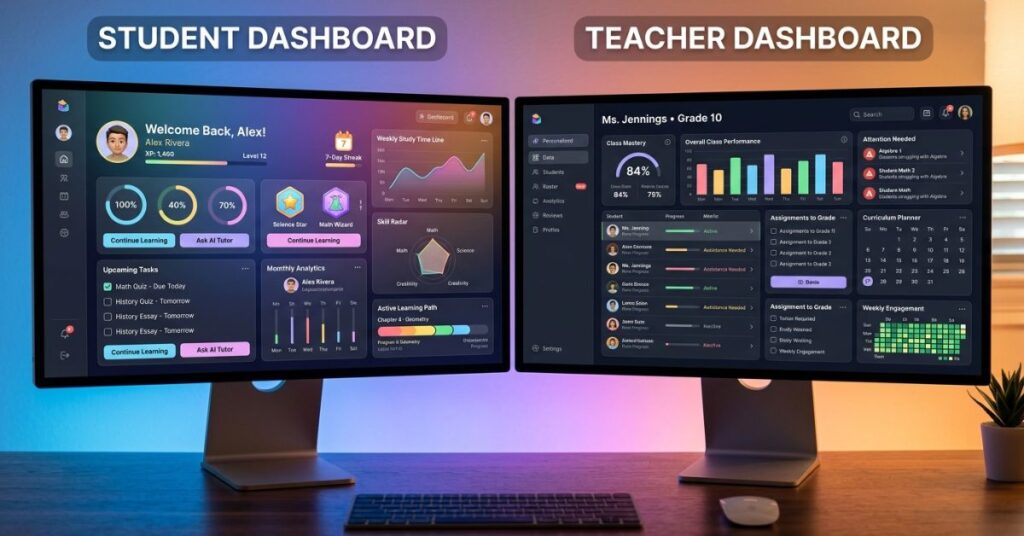
Clever provides personalized dashboards that help users find the digital tools they need. A student dashboard may display applications assigned to a particular class or grade level. A teacher dashboard can provide access to classroom resources and connected teaching tools.
These dashboards make the Clever Portal easier to use. Students do not need to search through long lists of websites. Teachers can also reach digital classroom tools from one central location.
The available applications depend on district settings, user roles, and permissions. As a result, two students at different schools may see different dashboards.
For example, a teacher might say, “Open Clever and select our reading application.” Students can follow the same steps even when their assigned tools differ.
Personalized dashboards help users:
- Find assigned applications quickly.
- Open classroom resources in one place.
- Access grade-level learning tools.
- Reduce confusion between different school websites.
How to Log In to Clever.com as a Student
Students can usually log in to Clever through their school’s official login page. The exact steps depend on the school district and its chosen authentication method. Your teacher or school IT administrator can provide the correct login link and credentials.
Follow these general steps:
- Open your school’s official Clever login page.
- Search for your school if the page asks you to.
- Choose the correct school or district.
- Select the available login method.
- Enter your school-issued credentials if required.
- Open your Clever Portal after signing in.
Some schools support Google account or Microsoft account sign-in. Others provide Clever Badge login, which uses camera-based sign-in on supported devices.
If you enter an incorrect password, use the school’s approved password recovery or password reset process. Never share your login details with strangers.
Example conversation:
Student: How do I open my math app?
Teacher: Sign in to Clever and select the math application on your dashboard.
How Teachers Access and Use Clever
Teachers use Clever to access classroom applications, organize digital resources, and support daily lessons. Their school or district usually creates their account and assigns the correct permissions. Teachers can then sign in through the official Clever login page using an approved authentication method.
Depending on district settings, teachers may use school-issued credentials, Google account sign-in, Microsoft account sign-in, or another supported method.
After logging in, teachers can use their dashboard to open connected educational software. Some tools help them manage classroom activities, view student access, or share instructional materials. Clever’s rostering connections can also help keep classroom rosters aligned with school enrollment information.
Teachers commonly use Clever to:
- Open school-approved applications.
- Access digital classroom tools.
- Find resources for different grade levels.
- Support student login and home learning.
- Reduce repeated sign-in steps.
For example, a teacher might tell a class, “Open Clever, then choose today’s reading activity.” The same portal gives students a simple starting point.
Key Features of Clever.com Explained
Clever offers several features that help schools manage educational technology. Its tools support account access, application connections, and classroom workflows. However, the exact features available depend on each school district’s settings and products.
Important features include:
- Single sign-on: Lets users access connected applications through one approved login process.
- Clever Badges: Supports camera-based sign-in for students at participating schools.
- Automated rostering: Helps sync classroom rosters and enrollment information.
- Clever Portal: Gives users a central place to open assigned applications.
- Identity and access management (IAM): Helps schools manage accounts, permissions, and access.
- Clever IDM: Provides identity management capabilities for supported school systems.
- Application integrations: Connects schools with third-party educational software.
Some districts may also use multi-factor authentication and additional account security controls. These features can reduce administrative work while helping students and teachers reach the right learning tools.
Clever Portal
The Clever Portal is the central dashboard where students and teachers access connected school applications. It works as a school-managed portal, so the available tools depend on the user’s school, role, and district settings.
After signing in, you may see icons for reading applications, mathematics applications, classroom activities, and other assigned resources. Select an application to open it. In many cases, Clever’s single sign-on technology handles the connection without asking you to enter another password.
Students can use the portal for classroom work or home access when their school allows it. Teachers can use it to reach instructional materials and digital classroom tools.
The Clever Portal may help you:
- Find assigned applications in one place.
- Open school-approved learning resources.
- Access tools for classroom activities.
- Move between connected educational software.
If an expected application does not appear, ask your teacher whether your account has the correct access. Also, make sure you are using your school’s official Clever Portal link. A website review or unrelated result mentioning globalunpaid com does not establish any connection with Clever.com.
Single Sign-On
Single sign-on (SSO) makes it easier for students and teachers to access school applications. Instead of remembering separate passwords, users can sign in through Clever and open connected educational software. This saves time during classroom activities and reduces repeated login steps.
Clever works with a school’s chosen identity provider to confirm each user’s identity. Depending on district settings, users may sign in with school-issued credentials, a Google account, or a Microsoft account.
Benefits of SSO include:
- Faster access to digital learning applications.
- Fewer passwords for students to remember.
- Easier access to assigned classroom resources.
- Better control over school accounts and permissions.
Example conversation:
Student: Do I need another password for my reading app?
Teacher: No. Sign in to Clever and open it from your dashboard.
Clever Badges
Clever Badges provide a simple way for students to sign in without typing usernames and passwords. Each participating student receives a school-approved Badge with a unique visual code. They can hold it in front of a compatible device camera to complete camera-based sign-in.
This method can help younger learners, especially elementary school students who may struggle with remembering login details. However, Badge login must be enabled by the school district.
Clever Badge login usually involves:
- Receiving a Badge from your school.
- Opening the school’s Clever login page.
- Allowing camera access when requested.
- Holding the Badge in front of the camera.
- Waiting for the student dashboard to appear.
Keep your Badge in a safe place. If it gets lost or stops working, contact your teacher or school technology support team. Never use an unknown website to scan school login codes.
Automated Rostering
Automated rostering helps schools organize student accounts and classroom access. Clever can connect with a school’s student information system to receive enrollment information and classroom rosters. This reduces the need for school staff to enter the same information into multiple educational applications.
When a student joins a class, the system can help provide access to assigned learning tools. If a student changes classes, updated information can help adjust that access.
Automated rostering can help schools:
- Keep classroom rosters organized.
- Connect students with the correct applications.
- Support class roster updates.
- Manage grade-level access.
- Reduce repetitive administrative work.
For example, when a student moves from one class to another, the school may update the roster. Connected applications can then reflect the new classroom assignment. The exact update process depends on district settings and application integrations.
Digital Classroom Tools
Clever connects students and teachers with digital classroom tools selected by their school district. These tools support different learning activities, including reading practice, mathematics exercises, classroom assignments, and instructional materials.
Instead of visiting several websites, users can open the Clever Portal and select an assigned application. The available tools depend on school-approved applications and the user’s grade level or classroom role.
Common types of connected tools include:
- Reading applications for literacy practice.
- Mathematics applications for problem-solving.
- Digital resources for classroom activities.
- Educational software for specific subjects.
- Tools that support assignments and learning activities.
For example, a teacher might ask students to open a reading application before starting a lesson. Students can find it through their personalized dashboard. Clever provides access, while each connected application handles its own learning activities.
Identity and Access Management

Identity and access management (IAM) helps schools control who can use their digital systems. Clever supports this process by connecting user identities with approved educational applications. School IT administrators can manage accounts, permissions, and access based on district settings.
Clever IDM provides identity management capabilities for supported school systems. These tools can help schools organize account provisioning and manage changes when students or staff join, leave, or change roles.
IAM can help schools with:
- Creating and managing user accounts.
- Assigning application permissions.
- Organizing student and teacher access.
- Supporting account provisioning.
- Managing access across connected applications.
For example, a student may receive access to reading and mathematics applications. A teacher may see additional classroom tools. These differences help schools provide suitable access without giving every user the same permissions.
Security and Multi-Factor Authentication
Clever supports security measures that help schools manage account access. Depending on the district’s setup, users may sign in through different authentication methods. Some schools may also require multi-factor authentication (MFA) for added account protection.
MFA asks users to complete an additional verification step. This can make unauthorized access harder if someone obtains a password. Classroom MFA may be available in supported school environments, but not every district uses the same settings.
Security practices may include:
- Using approved school login methods.
- Protecting usernames and passwords.
- Following district authentication rules.
- Reviewing unexpected sign-in requests.
- Contacting technology support about suspicious activity.
For example, if a sign-in page suddenly requests unfamiliar personal information, stop and check with your school. Never share verification codes with strangers. Security features and requirements can vary by district and connected application.
What Are Clever Badges and How Do They Work?
Clever Badges are visual login codes that help students access their school accounts. They offer an alternative to typing a username and password. This can make the student login process easier for younger children and students who need a simpler authentication method.
A school usually provides the Badge and enables the feature for participating students. The student opens the official Clever login page and uses a compatible device camera to scan the code.
Here is how the process generally works:
- Open your school’s Clever login page.
- Choose the Badge login option.
- Allow camera access if requested.
- Hold your Clever Badge in front of the camera.
- Wait for the system to recognize it.
- Open your assigned learning applications.
Example conversation:
Student: My Clever Badge isn’t working. What should I do?
Teacher: Check the camera and try again. If it still fails, ask the school for help.
If your Badge is lost, damaged, or rejected, contact your teacher or school IT administrator. They can explain how to replace it or use another approved login method. Do not upload your Badge to unrelated websites such as globalunpaid com.
How to Use Clever.com for Learning at Home
Clever can help students access school-approved learning applications outside the classroom. If the school district allows home access, students can sign in through the official Clever Portal using a supported device and internet connection.
This makes it easier to continue classroom activities after school. Students may open reading applications, mathematics applications, and other assigned educational software from home.
Follow these steps to get started:
- Open the official Clever login page.
- Find your school or district.
- Sign in using your approved authentication method.
- Open your student dashboard.
- Select the application assigned by your teacher.
- Complete the available learning activities.
Parents and guardians can help younger children find the correct login page. They should also make sure children use school-approved applications.
Example conversation:
Parent: Where can you find your homework application?
Student: I can sign in to Clever and open it from my dashboard.
If an application does not appear, ask the teacher whether it is assigned for home use. Some tools may only work under specific school or district settings.
Is Clever.com Safe and Legitimate?
Clever.com is an established educational technology platform used by schools to manage access to digital learning applications. It provides login and identity services for participating K-12 schools. Students and teachers can use it to reach school-approved educational software through a central portal.
However, using a legitimate platform does not mean every website mentioning Clever is trustworthy. Fake school login pages and phishing links can imitate familiar services. Always check the web address before entering school credentials.
To use Clever more safely:
- Start from your school’s official website.
- Check that the login page is correct.
- Avoid unfamiliar links in messages.
- Never share passwords or verification codes.
- Report suspicious sign-in requests.
Parents and guardians should teach children these safe login practices. A website review or unrelated domain, including globalunpaid com, should not be treated as an official Clever login source.
Is Clever a Real Educational Platform?
Yes. Clever is a real educational technology (EdTech) platform that supports digital learning access for schools. Clever Inc. provides identity and access services that help participating K-12 school districts connect students and teachers with educational applications.
Schools use the Clever Portal as a central place for approved learning resources. Its tools can support single sign-on, automated rostering, and application integrations. This helps reduce the number of separate login steps users need.
Clever serves several groups:
- Students who need access to school applications.
- Teachers who use digital classroom tools.
- Parents and guardians who support home learning.
- School IT administrators who manage accounts.
- District technology teams that organize application access.
Clever does not replace every classroom platform or learning management system. Instead, it helps users reach connected educational software. Always use your district’s official link to access the service.
How Clever Protects Student Information
Student data privacy is an important concern for schools and families. Clever describes its role as helping schools manage access to educational applications while supporting student information protection. Its privacy and security practices should be reviewed through official privacy disclosures and current documentation.
Schools also make decisions about which applications receive student information. Data sharing can depend on the services a district connects and the information needed for educational activities.
Clever describes security measures that may include administrative, technical, and physical safeguards. These measures are intended to help protect information from unauthorized access.
Families and schools should:
- Review relevant privacy disclosures.
- Understand which applications students use.
- Ask about district data-sharing settings.
- Follow school account security policies.
- Contact the district with privacy concerns.
Do not assume every third-party application follows identical practices. Each application may have separate privacy commitments and contractual requirements.
Student Privacy and Data Sharing
Student privacy involves more than protecting passwords. It also includes understanding what information schools collect, how applications use it, and when data is shared. Clever connects schools with third-party applications, so data sharing may occur when students access approved educational software.
The exact information involved depends on the school district, connected application, and purpose of the service. Schools should review privacy disclosures and contractual requirements for application partners before approving educational tools.
Clever has stated privacy commitments concerning student information, including no sale of student data and no advertising to students. Families should consult the current official privacy policy for the full details and applicable terms.
Parents and guardians can ask schools:
- Which applications receive student information?
- What information does each tool need?
- How does the school review application privacy?
- Where can families read privacy disclosures?
These questions help families understand how student data privacy works across connected learning services.
Account Security and Safe Login Practices
Good login habits help protect student accounts. Even when a school uses Clever, students and teachers should follow basic account security rules. A strong password, careful link checking, and responsible device use can reduce common risks.
Phishing messages may imitate school websites or ask users to confirm their login details. Fake school login pages can look convincing, so check the web address before signing in.
Follow these safe login practices:
- Use the official login page provided by your school.
- Keep school-issued credentials private.
- Never share passwords or verification codes.
- Avoid clicking suspicious links.
- Sign out on shared or public devices.
- Report unusual sign-in requests to school staff.
Example conversation:
Student: A message says I must enter my password to keep my account active.
Teacher: Don’t open the link. Ask the school IT team to check it first.
If you suspect someone accessed your account, contact school technology support promptly.
Is Clever.com Free or Paid?
Clever offers services that help schools connect users with educational applications. Some Clever services are free for schools, while the company also offers optional paid products. The available features and licensing costs depend on the product and agreement.
Students and families generally do not need to purchase a personal Clever subscription to use a school-provided account. Their access usually depends on the school district’s arrangements with Clever and connected application providers.
Keep these points in mind:
- Some school access services are free for schools.
- Optional paid products may have separate pricing information.
- Licensing costs can vary by product and agreement.
- Third-party learning applications may have their own subscriptions.
- Families should follow school instructions about payments.
If you see a request to pay for basic student login, check with your school before entering payment information. Ask the district technology team which services your school provides and whether any separate costs apply.
Common Clever Login Problems and Solutions
Clever login problems can happen because of incorrect credentials, browser settings, school account changes, or internet issues. Most problems have simple solutions, but some require help from your teacher or school IT administrator.
Try these checks before contacting technology support:
| Login problem | Possible solution |
| Incorrect password | Check your details or follow the school password reset process. |
| School missing from search | Confirm the school name and district. |
| Clever Badge not working | Check camera access and Badge condition. |
| Repeated login redirects | Refresh the page or try another supported browser. |
| Missing learning application | Ask whether the application is assigned to your account. |
| Camera access blocked | Review browser permissions. |
| Slow or failed login | Check your internet connection. |
Also confirm that your device meets the school’s requirements. Browser compatibility can affect some login methods.
Example conversation:
Student: I signed in, but my math app is missing.
Teacher: I’ll check your account and classroom access.
Never share your password with someone offering unofficial login help.
Clever.com vs Google Classroom: What’s the Difference?
Clever and Google Classroom support digital learning, but they serve different purposes. Clever mainly works as an identity and access platform. It helps students and teachers open connected educational applications through a central portal.
Google Classroom is a classroom management tool within Google Workspace for Education. Teachers can use it to share assignments, organize classwork, provide feedback, and support classroom communication.
| Feature | Clever.com | Google Classroom |
| Main purpose | Application access and identity services | Classroom management |
| Student login | Supports connected school sign-in | Uses a Google account |
| Assignments and grading | Depends on connected applications | Supports classroom assignments and grading workflows |
| Application access | Connects approved learning tools | Integrates with Google Workspace and other tools |
| Classroom communication | Not its main purpose | Supports teacher-student communication |
Some schools use both platforms together. Students may sign in through Clever and open Google Classroom or other school-approved applications from their dashboard.
Who Benefits Most From Using Clever?
Clever supports several groups within the K-12 education system. Students use it to reach assigned applications, while teachers access classroom resources. Parents and guardians may also use school guidance to help children with home access.
School IT administrators and district technology teams benefit from tools that organize accounts, permissions, and application connections. The platform’s usefulness depends on how a school configures its services.
Clever can help:
- Students find digital learning resources.
- Teachers reach classroom applications.
- Families support learning at home.
- Administrators manage account access.
- Districts organize educational software.
For example, a school can connect reading and mathematics applications to student accounts. Teachers can then direct students to the correct resources without sharing several separate website links.
Elementary School Students
Elementary school students often need simple ways to access digital learning tools. Clever can make this process easier through a student dashboard and supported Badge login. Younger learners may find scanning a Clever Badge easier than typing a long username and password.
Once signed in, students can open applications assigned by their teachers. These may include reading applications, basic mathematics activities, and other age-appropriate classroom resources.
Clever may help elementary students:
- Access school-approved applications.
- Find classroom activities in one place.
- Practice reading and mathematics.
- Use camera-based sign-in when enabled.
- Continue learning at home when permitted.
Teachers and parents can guide children through the login process. For example, a teacher might say, “Scan your Badge, then open the reading app.” The student can follow those steps with less confusion.
Middle and High School Students
Middle and high school students often use several digital learning applications throughout the school day. Clever gives them one central place to access tools assigned by their school district. These resources may support different subjects, projects, and classroom activities.
Students can use their personalized dashboard to open approved educational software. Depending on district settings, their applications may change when they move between classes or grade levels.
Clever can help older students:
- Access subject-specific learning tools.
- Open reading and mathematics applications.
- Find assigned classroom resources.
- Use school-approved applications at home.
- Reduce repeated login steps.
For example, a student may open one application for science and another for mathematics. Both can appear in the same Clever Portal.
Students should still protect their school-issued credentials. If an application is missing, they should ask a teacher or school technology support team.
Teachers
Teachers use Clever to reach digital classroom tools and organize access to learning resources. Their dashboard may include applications for lesson planning, student activities, and instructional materials. The exact tools depend on the school’s application integrations and permissions.
Clever can also support automated rostering. This helps connect classroom rosters with the applications students need. When school records change, updated enrollment information can help keep access organized.
Teachers may use Clever to:
- Open connected educational software.
- Access assigned classroom resources.
- Support student login.
- Find subject-specific applications.
- Use tools connected to classroom activities.
For example, a teacher might ask students to open a mathematics application before a lesson. Instead of sharing a new website link, the teacher can direct everyone to the Clever dashboard.
This simple workflow can save class time and reduce login confusion.
Parents and Guardians
Parents and guardians can help children use Clever for schoolwork, especially when learning at home. They may guide younger students through the official login page and help them find assigned applications.
However, Clever access is usually managed by the school district. Parents may not receive a separate Clever account unless their school provides one. The available features also depend on district settings.
Families can support children by:
- Saving the correct school login link.
- Helping students protect their credentials.
- Checking that children use assigned applications.
- Asking teachers about missing resources.
- Contacting school technology support when login fails.
Example conversation:
Parent: Why can’t you open your reading application?
Student: It isn’t showing on my Clever dashboard.
Parent: Let’s ask your teacher whether it’s assigned to your account.
Parents should also review relevant student data privacy information. This helps families understand how connected educational applications handle student information.
School IT Administrators
School IT administrators help manage the technology systems that support Clever. They may work with the district technology team to connect student information systems, configure application integrations, and organize user access.
Their responsibilities can include account provisioning, permissions, authentication methods, and classroom roster updates. Automated rostering can reduce manual work when enrollment information changes. Administrators also help teachers and students resolve technical login problems.
Common responsibilities include:
- Setting up Clever for the school district.
- Managing identity and access controls.
- Connecting approved educational applications.
- Reviewing user permissions and access.
- Supporting login and authentication issues.
- Coordinating with application providers.
For example, when a student changes schools, administrators may need to update the student’s account and application access. They can also investigate missing applications or repeated login redirects.
Strong account management helps schools provide reliable access while supporting student information protection.
Clever.com Advantages and Limitations
Clever.com makes digital learning easier by giving students and teachers one central place to access school-approved applications. Its single sign-on (SSO) feature reduces repeated login steps. Automated rostering can also help schools manage classroom access and student accounts.
However, Clever has some limitations. The platform depends on school district settings and connected applications. Students cannot access every educational tool unless their school provides permission.
Advantages include:
- One dashboard for connected learning applications.
- Easier student and teacher login.
- Support for Clever Badge authentication.
- Automated classroom roster updates.
- Better organization of school accounts.
- Access to learning resources from home when permitted.
Limitations include:
- Missing applications may require school approval.
- Login options vary between districts.
- Some features require paid products.
- Technical problems can interrupt access.
- Clever does not replace every learning management system.
For example, a student may ask, “Why can’t I find my science app?” The answer may be simple: the school hasn’t assigned it.
What Happens After a Student Logs Into Clever?
After a student completes the Clever login process, the platform opens their personalized student dashboard. This dashboard displays the learning applications assigned by their school or district. Students can select an application to access reading activities, mathematics lessons, classroom resources, and other digital learning tools.
With single sign-on, many connected applications open without requiring another username and password. However, some third-party applications may request additional verification or have separate login requirements.
After signing in, students can usually:
- View assigned learning applications.
- Open digital classroom tools.
- Access grade-level resources.
- Continue classroom activities.
- Use approved applications for home learning.
The available tools depend on classroom rosters, account permissions, and district settings.
Example conversation:
Teacher: Have you opened today’s reading activity?
Student: Yes. I signed in to Clever and selected the reading app.
If the dashboard looks empty, students should check with their teacher. Their account or application access may need an update.
Why Can’t Students See Every Learning App in Clever?
Students cannot always see every application connected to Clever. Schools control which educational software appears on each user’s dashboard. A school district may assign different tools based on grade level, classroom rosters, subjects, and student permissions.
For example, an elementary school student may see basic reading and mathematics applications. A high school student may receive access to subject-specific software instead.
Common reasons for missing applications include:
- The school hasn’t approved the application.
- The teacher hasn’t assigned the learning tool.
- The student’s classroom roster needs an update.
- The account has incorrect permissions.
- The application integration has a technical issue.
- The student signed in with the wrong school account.
Example conversation:
Student: My friend has a science app, but I can’t see it.
Teacher: Your class may have different application access. I’ll check your assigned resources.
First, refresh the Clever Portal and confirm your account. If the application remains missing, contact your teacher or school IT administrator.
What Parents Should Know Before Their Child Uses Clever
Parents and guardians should understand how Clever works before helping their children use it. Clever provides a central place for students to access school-approved learning applications. However, the school district usually manages accounts, login methods, and application permissions.
Children may sign in with school-issued credentials or use Clever Badge login when their school supports it. Parents can help younger students follow the correct steps, especially during home learning.
Families should remember these points:
- Use the official Clever login page provided by the school.
- Keep student usernames and passwords private.
- Check which applications the school has approved.
- Review relevant student data privacy disclosures.
- Ask teachers about missing learning applications.
- Contact school technology support for account problems.
Parents should also understand that third-party applications may have separate privacy disclosures and data-sharing practices.
Example conversation:
Parent: Should you enter your school password on this new website?
Child: I’ll check with my teacher first.
This simple habit can help protect student information. Avoid unrelated websites such as globalunpaid com when searching for Clever login support.
When Clever Is Useful and When It Is Not Enough
Clever is useful when schools want to simplify access to digital learning applications. It gives students and teachers one central portal for connected educational software. Its single sign-on features, automated rostering, and personalized dashboards can make daily classroom routines easier.
Students can use it to open assigned reading applications, mathematics tools, and other school-approved resources. Teachers can also reach classroom tools without sharing several separate website links.
However, Clever does not handle every part of the learning process. It mainly supports identity management and application access. Students may still need separate platforms for assignments, grading, classroom communication, and instructional materials.
Clever is useful when you need to:
- Access several school applications.
- Simplify student login.
- Organize classroom resources.
- Support learning at home.
- Manage connected school accounts.
It may not be enough when you need:
- A complete learning management system.
- Detailed assignment and grading tools.
- Full classroom communication features.
- Applications your district hasn’t approved.
For example, a student can use Clever to open Google Classroom. However, Google Classroom handles classwork and assignments rather than Clever.
The best results often come when schools use Clever alongside suitable educational software.
Frequently Asked Questions
Can students access their school apps from home?
Students can access school apps from home when their district enables home access through the Clever Portal.
Do children need separate passwords for every learning application?
Children don’t always need separate passwords. Clever single sign-on can open connected applications using their school-approved login details instead.
Can parents create Clever accounts independently?
Parents usually cannot create accounts independently because schools manage Clever access and provide login details to families through district systems.
Why is a school missing from the login page?
A school may be missing because it doesn’t participate, its listing changed, or you entered an incorrect name online.
What should students do when their password stops working?
If a password stops working, check your typing, then follow school password reset instructions or contact your teacher or technology support team.
Can teachers choose which resources appear in the portal?
Teachers can often assign resources through district settings, but available choices depend on school permissions, connected applications, and policies.
Does the platform work with Google Classroom?
Yes, Clever can connect students to Google Classroom through school integrations, allowing access from the portal when administrators enable it.
Can younger students sign in without typing passwords?
Younger students can use Clever Badge login, scanning a school-issued Badge with a compatible camera instead of typing passwords themselves.
Who should families contact when access is unavailable?
Families should contact their child’s teacher or school technology support team. globalunpaid com is not an official Clever support source.
Conclusion
Choosing whether to trust a website takes more than a quick look. You should check its purpose, content, ownership, and safety details first. The same applies when researching globalunpaid com. Take time to review its information and look for clear contact details. Don’t trust every claim without checking the facts. These simple steps can help you avoid misleading information and protect your personal details. A careful review always makes a difference.
Before using globalunpaid com, consider what the website offers and whether its information seems reliable. Check for possible warning signs and avoid sharing sensitive details without a good reason. Remember, globalunpaid com should be judged through verified information, not assumptions. Whether you are browsing for general knowledge or researching an unfamiliar platform, stay alert. A little caution can help you make smarter online choices and browse with greater confidence.
