

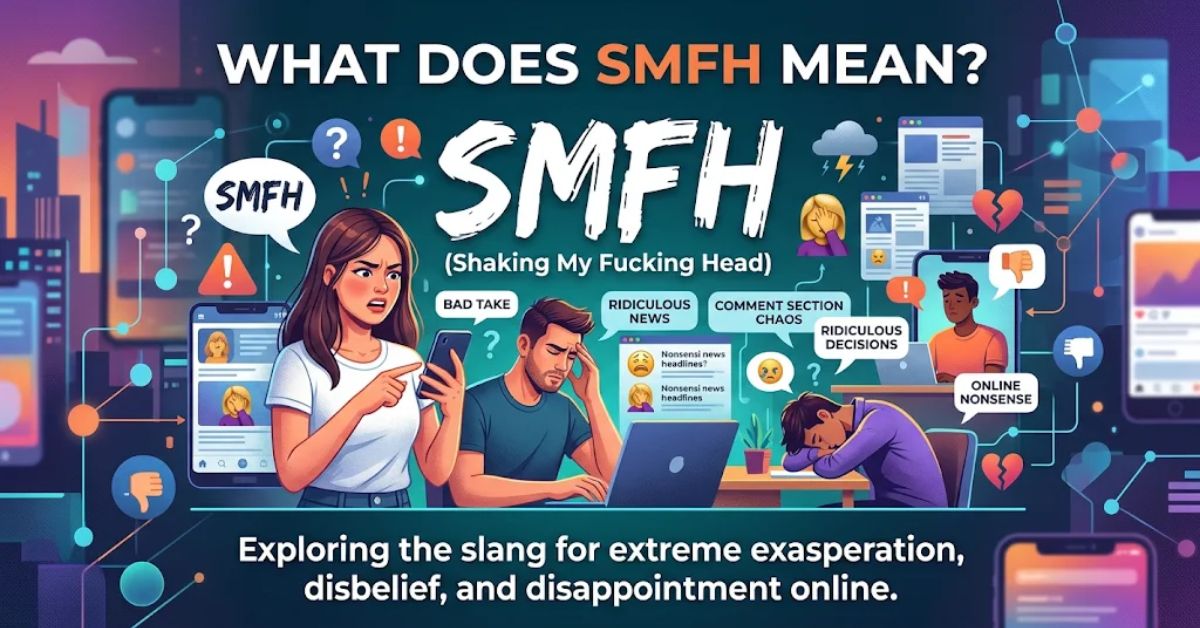
Ever read a text that leaves you shaking your head? Maybe someone made a silly mistake or said something completely ridiculous. You might see SMFH in response. But what does it really mean? The smfh meaning is Shaking My F*ing Head. People use this slang to express strong frustration, disbelief, annoyance, or disappointment. It adds extra emotion to a message and sounds stronger than SMH. You’ll often spot it in text messages, Instagram comments, TikTok posts, and group chats.
Still, SMFH doesn’t always show real anger. Friends may use it to tease each other or react to funny situations. It can also express sarcasm or secondhand embarrassment. The meaning often depends on the conversation and the relationship between the people texting. This guide explains where SMFH came from, how people use it, and what it means across social media. You’ll also find real examples and simple replies you can use.
Origin and Cultural Footprints

The smfh meaning connects to a simple body language cue: shaking your head when something seems ridiculous. People have used this head-shake gesture for generations to express disbelief, frustration, or disapproval. With the growth of text messaging, internet users turned this familiar reaction into the shorter acronym SMH.
Later, people added an extra letter to create SMFH. This intensified acronym gave texters a stronger way to express disappointment or annoyance. It gradually spread through online forums, early social media, and comment sections.
During the early 2010s, meme culture and group texting helped SMFH gain mainstream attention. Today, people still use it when ordinary words or a simple SMH don’t express enough frustration.
Other Meanings of SMFH
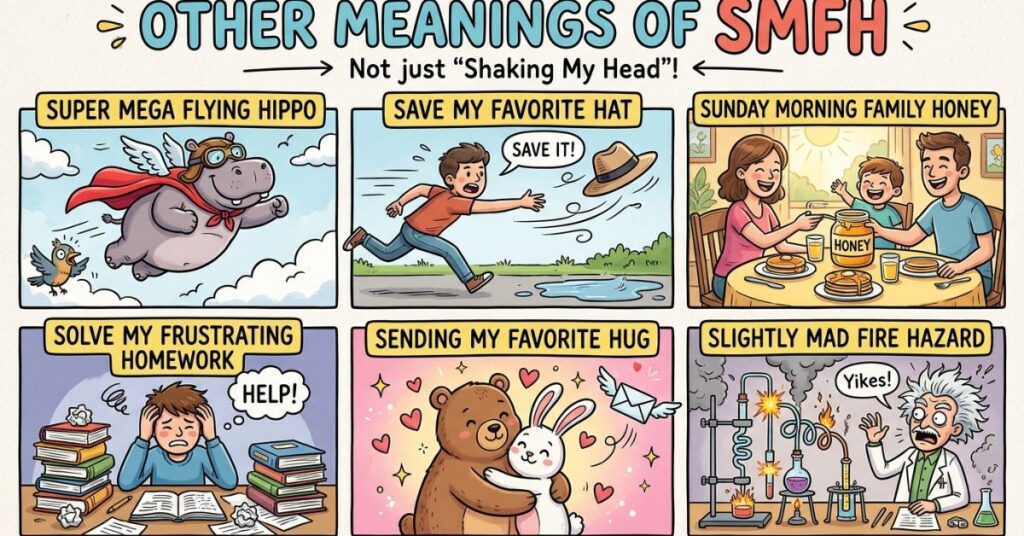
The most widely recognized smfh meaning is Shaking My F*ing Head. People use it to express strong disbelief, disappointment, disgust, or frustration. However, some online communities may give the acronym different meanings through inside jokes or regional shorthand drift.
Here are a few interpretations worth knowing:
- Shaking My F*ing Head: The primary meaning, used when something feels ridiculous or disappointing.
- So Much for Hope: A rare alternative interpretation that may appear in sarcastic or disillusioned conversations.
- Community-specific meanings: Some online groups create their own shorthand that only their members understand.
Don’t assume every alternative represents a widely accepted definition. In everyday text messaging, SMFH usually expresses an intensified head-shaking reaction.
Why Does SMFH Have So Many Different Definitions?
Internet slang rarely stays in one place. People constantly create new abbreviations, change existing expressions, and develop meanings within their online communities. That’s one reason an acronym can sometimes have several interpretations.
However, the smfh meaning remains fairly consistent across everyday conversations. Its primary definition expresses strong frustration, disbelief, or disappointment. Unlike broader abbreviations, SMFH usually carries a specific emotional register.
A few factors can influence how people interpret it:
- Context: The surrounding message helps explain the sender’s intention.
- Online communities: Group chats and forums sometimes develop inside jokes.
- Tone: Sarcasm and playful exaggeration can change the emotional intensity.
- Word choice: Capitalization and surrounding slang can influence interpretation.
For example, someone might send SMFH after a serious mistake or use it jokingly after a friend’s silly decision.
Does SMFH Mean the Same Thing Outside the US?
Yes, SMFH generally carries the same meaning outside the United States. American texters, British texters, and Australian texters commonly use it to express frustration, disbelief, or disappointment. The basic expression doesn’t change simply because someone lives in another country.
However, local slang habits can influence how people communicate. British texters might use expressions like smh mate when reacting to something disappointing. Australian texters may also combine familiar internet slang with their everyday expressions.
For example:
- American texter: That was such a terrible decision, SMFH.
- British texter: You really forgot your keys again, smh mate.
- Australian texter: Mate, you missed the train again, SMFH.
The wording may vary, but the emotional reaction stays similar. Always consider the surrounding conversation before interpreting the message.
Who Uses It Most?
SMFH appears across different age groups and online communities. However, Gen Z and millennials often use internet slang in casual conversations, group chats, and social media comments. They understand how a small abbreviation can communicate a surprisingly strong reaction.
Different audiences also use it for different reasons:
- Gen Z: Expresses disbelief, annoyance, and playful disapproval.
- Millennials: Uses it in everyday texting and online discussions.
- Sports fans: Reacts to missed open goals, bad plays, and disappointing results.
- Coworkers: May use it privately when discussing workplace frustration.
- Close friends: Shares funny reactions and exaggerated disappointment.
For example, a sports fan might text, “He missed an open goal again, SMFH.” The message shows frustration without requiring a long explanation.
Although many texters recognize SMFH, its use depends on personal style and the situation.
Real Conversation Examples Using SMFH
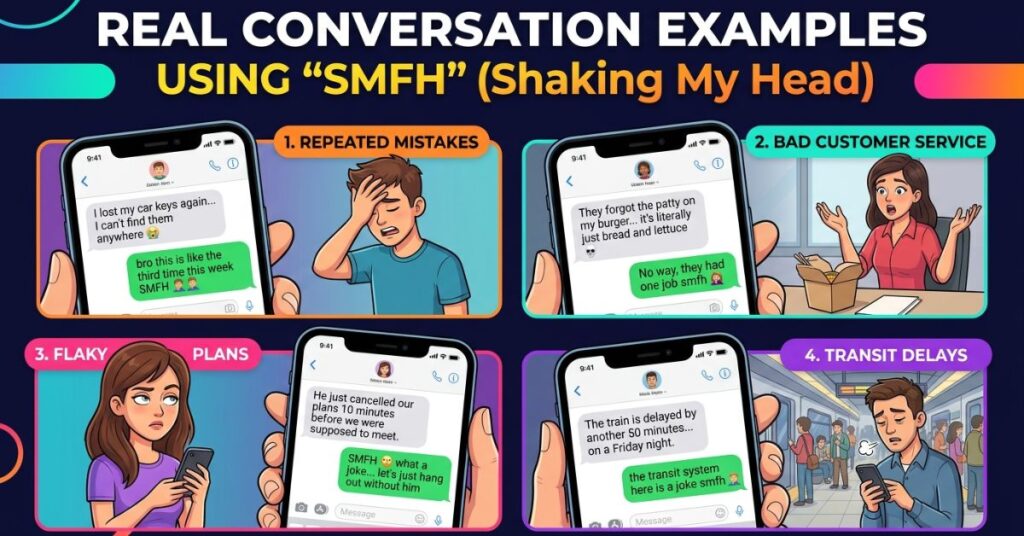
Real conversations make the smfh meaning easier to understand. People usually send this abbreviation when something disappoints them, surprises them, or makes them shake their heads.
Here are some everyday examples:
Example 1: Rejected application
- Friend: They rejected my application because of one spelling mistake.
- You: SMFH, that’s honestly unfair.
Example 2: Sports blunder
- Friend: He missed an open goal during the final minute.
- You: SMFH, how does that even happen?
Example 3: Funny situation
- Friend: I walked into the wrong classroom again.
- You: SMFH, you really need to pay attention!
Example 4: Personal frustration
- Friend: I forgot my phone charger at home.
- You: SMFH, that’s the third time this week.
Notice how the same acronym works in different situations. Sometimes it communicates genuine disappointment. Other times, it adds humor to an ordinary mistake.
Usage of SMFH in Different Contexts
The emotional intensity of SMFH depends on the situation. A serious conversation may carry genuine frustration, while a friendly group chat might use it for playful exaggeration. Understanding the context helps you avoid misreading the sender’s intention.
Here are some common situations:
- Serious frustration: Someone might send SMFH after receiving disappointing news or facing an unfair situation.
- Joking conversations: Friends use it when someone makes a silly mistake.
- Sports reactions: Fans type SMFH after bad plays or unexpected losses.
- Social media: People use it under cringe videos, frustrating posts, and ridiculous news.
- Workplace chats: Coworkers may use it privately when discussing stressful situations.
For example, “You forgot the meeting again, SMFH” could express real annoyance. However, between close friends, the same message might simply sound playful.
Always consider your relationship with the sender before deciding how serious the reaction feels.
How Gen Z Uses SMFH Today
Gen Z uses SMFH as an intensifier when ordinary expressions don’t communicate enough frustration. The acronym gives a message extra emotional weight without requiring a lengthy explanation. It often appears in TikTok comments, Instagram DMs, Discord chats, and group texting.
For many young texters, SMFH also creates a playful way to react to everyday situations. Someone might use it after watching an embarrassing video or hearing about a friend’s questionable decision.
Gen Z often follows an informal hierarchy of acronyms:
- SMH: Mild annoyance or disbelief.
- SMFH: Stronger frustration or disappointment.
- SMMFH: An even more emphatic variation in some conversations.
For example, someone might comment, “SMFH, why would he do that?” under a ridiculous video.
Still, SMFH doesn’t always signal genuine anger. Sometimes it simply adds sarcasm, mockery, or playful disapproval to an online reaction.
Does SMFH Mean Someone Is Actually Angry?
Not necessarily. The smfh meaning usually expresses frustration, disbelief, or disappointment. However, it doesn’t always mean someone feels genuinely angry. People often use it to exaggerate their reactions during casual conversations.
For example, a friend might send SMFH after hearing about a silly mistake. They’re probably joking rather than expressing serious frustration.
Here are a few ways to understand the emotion:
- Passing frustration: Someone reacts to an annoying situation but quickly moves on.
- Genuine disappointment: A person feels upset about an unfair or unpleasant event.
- Sarcasm: Someone uses SMFH to mock a ridiculous decision.
- Playful exaggeration: Friends use it to tease each other over small mistakes.
Conversation example:
- Friend: I forgot my wallet at home again.
- You: SMFH, you never learn!
The surrounding message helps you understand whether the sender feels annoyed or simply jokes around.
Meaning Across Social Media
The smfh meaning stays mostly consistent across social media platforms. However, people use this abbreviation in different ways depending on the content and conversation. It often appears in comments, captions, livestream chats, and direct messages.
Here’s how people commonly use SMFH on popular platforms:
| Platform | Common Usage |
| Twitter/X | Reacting to frustrating news or ridiculous opinions |
| Expressing disappointment in comments and DMs | |
| Showing disbelief or mocking questionable decisions | |
| Discord | Reacting to gaming mistakes and unexpected losses |
| TikTok | Commenting on cringe videos and embarrassing moments |
| Responding to frustrating posts or personal updates | |
| Slack DMs | Expressing private workplace frustration |
Conversation example:
- Friend: Did you see that embarrassing TikTok video?
- You: Yes, SMFH. I can’t believe that happened!
Whether you’re scrolling through Instagram or chatting on Discord, context helps explain the intended reaction.
Common Confusions
Internet abbreviations can look similar, especially when people type quickly. That’s why some readers misunderstand SMFH or confuse it with other short expressions. Understanding these differences helps you interpret messages correctly.
Here are some common misunderstandings:
- Confusing SMFH with SMH: Both express disbelief, but SMFH usually carries stronger emotional intensity.
- Assuming it always means anger: Sometimes people use it for sarcasm or playful disapproval.
- Misreading the tone: A joking message might sound serious without proper context.
- Ignoring profanity: The full expression contains profanity, which some platforms may filter or censor.
- Mixing it up with SMTH: SMTH usually means something, not an intensified head-shaking reaction.
Conversation example:
- Friend: He forgot his own birthday, SMFH.
- You: Are you seriously annoyed or just joking?
Remember that the surrounding words, relationship, and situation often reveal the real intention.
Related Slang Terms
SMFH belongs to a larger collection of internet slang and texting abbreviations. People often combine these expressions to communicate emotions quickly. Learning related terms also makes online conversations easier to understand.
Here are some useful expressions:
| Slang | Full Form | Meaning |
| SMH | Shaking My Head | Mild disbelief or disappointment |
| SMMFH | Shaking My Motherf*ing Head | Stronger frustration |
| SMTH | Something | A shortened form of something |
| SM | So Much | Used for emphasis or affection |
| FR | For Real | Shows agreement or sincerity |
| NGL | Not Gonna Lie | Introduces an honest opinion |
| Bruh | Brother | Expresses disbelief or annoyance |
| FTW | For the Win | Shows excitement or approval |
Other expressions include DBT, Moots, and NS, which can have different meanings depending on context.
For example, someone might text, “I love you sm” to express affection. Meanwhile, “smh mate” communicates disappointment in a casual way.
These expressions show how internet culture keeps changing everyday communication.
How to Reply When Someone Says SMFH
Your reply depends on the situation and your relationship with the sender. Sometimes people use SMFH because they want to vent. Other times, they’re simply reacting to something funny or ridiculous.
The best approach is to understand their mood before responding.
Here are some natural replies:
When someone feels frustrated:
- That’s honestly so frustrating.
- I completely understand your reaction.
- Yeah, that’s really disappointing.
When someone is joking:
- Haha, you’re too much!
- I know, that’s ridiculous!
- Bro, I can’t stop laughing.
When someone expresses disbelief:
- I had the same reaction.
- Seriously, what were they thinking?
- That’s unbelievable!
Conversation example:
- Friend: I missed the bus even though I arrived early, SMFH.
- You: That’s so annoying. Hopefully, the next one comes soon.
If someone sends SMFH during a serious conversation, offer acknowledgment before advice. A little solidarity can make the conversation feel more supportive.
When Did SMFH Go Mainstream?
SMFH gained wider attention during the early 2010s. It developed as a stronger version of SMH when internet users wanted an acronym that expressed deeper frustration. Online forums and early social media helped spread the expression among everyday texters.
As Twitter/X and other social platforms grew, people started using SMFH in comments, replies, and group chats. Meme culture also helped the abbreviation reach more online communities.
Several factors supported its mainstream adoption:
- Early social media: Users spread short expressions through posts and replies.
- Group texting: Friends began using SMFH during everyday conversations.
- Meme culture: Funny images and relatable reactions made the acronym familiar.
- Online communities: Forums and comment sections helped introduce it to new audiences.
Today, SMFH remains a recognizable part of internet slang. Although newer expressions appear regularly, people still use it to communicate disbelief, annoyance, and disappointment without typing a lengthy explanation.
Conclusion
SMFH is a simple slang term with a strong message. It means Shaking My F*ing Head. People use it to show frustration, disbelief, or disappointment. The smfh meaning can also change with the situation. Sometimes, it shows real annoyance. Other times, it adds humor or playful sarcasm. You may see SMFH in texts, comments, and social media posts. It is also stronger than the common term SMH.
Now that you understand the smfh meaning, you can use it with confidence. Pay attention to the conversation before replying. This helps you understand the sender’s tone and feelings. You can also use SMFH when something seems ridiculous or hard to believe. Just remember that it is casual slang. Avoid using it in formal messages or professional conversations. The right context makes all the difference.
FAQs
What Does SMFH Mean In Text?
The smfh meaning is Shaking My F*ing Head, a stronger way to express frustration, disbelief,
or disappointment in casual texts.
What Does SMMFH Mean?
SMMFH usually means Shaking My Motherf***ing Head. It adds emphasis to SMFH and shows intense
disbelief, frustration, or annoyance online.
What Does SMFH Mean On Instagram?
On Instagram, SMFH expresses disbelief, annoyance, or frustration about a post, story, or comment.
Its exact tone depends on context.
What Does SMTH Mean In Text Messaging?
SMTH usually means something in text messages. People use it as an abbreviation when typing
casually or keeping messages short.
What Does SMFH Mean In Slang?
In slang, SMFH means Shaking My F*ing Head. It signals stronger disbelief, frustration, or
disappointment than the common abbreviation SMH.
What Is SM In Gen Z?
SM means so much in Gen Z texts, often added to affectionate phrases like I
love you sm in chats.
When A Girl Says SMH?
When a girl says SMH, she may express disbelief, disappointment, or playful annoyance.
Context helps you understand her intended tone.
What Does FTW Mean In Gen Z Slang?
FTW means For The Win. Gen Z uses it to show excitement, support, or approval
after a win or moment.
What Does I Love You SM Mean?
I love you SM means I love you so much. It adds affection while keeping
the message casual and brief.
