


Ever received a message that ends with four simple letters: TTYL? You might see it after a fun chat, a quick catch-up, or a late-night conversation. But does it always mean someone will talk to you again soon? Not necessarily! This little abbreviation can carry different tones depending on who sends it and when they use it. Sometimes, it’s a friendly goodbye. Other times, it’s simply a quick way to step away from a conversation without sounding rude.
Understanding ttyl makes online conversations much easier to follow. You won’t have to guess what someone means or wonder how to respond. This guide explains its meaning, origin, and everyday uses in simple words. You’ll also find real chat examples, social media meanings, common confusions, and easy replies. By the end, you’ll know exactly how to use it naturally.
Origin and Cultural Footprints

The history of TTYL goes back to the early days of internet communication. During the late 1990s and early 2000s, teens and young adults used AOL Instant Messenger (AIM) to chat with friends. They needed quick ways to end conversations without typing long goodbyes.
As instant messaging became popular, TTYL turned into familiar digital shorthand. It also spread through SMS texting when character limits encouraged shorter messages.
- AOL Instant Messenger: Helped popularize TTYL among early internet users.
- SMS messaging: Made texting shorthand useful on flip phones.
- Smartphones: Kept the abbreviation alive across modern messaging apps.
- Social media: Introduced TTYL to newer generations.
For example:
Maya: Gotta head to class. TTYL!
Sam: Okay, talk soon!
Today, TTYL remains a recognizable casual sign off.
Other Meanings of TTYL
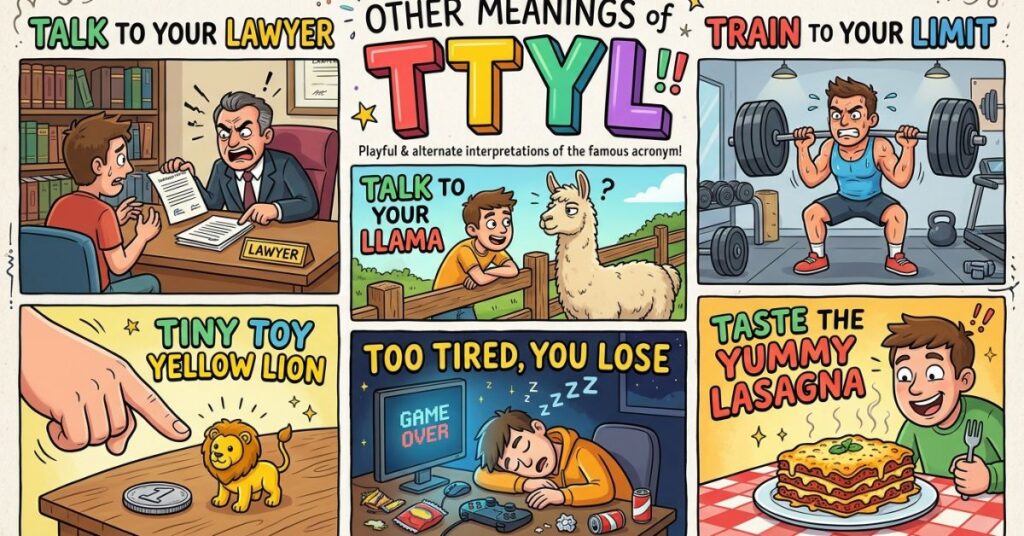
Although TTYL meaning in text usually refers to Talk To You Later, people sometimes use playful variations. These alternatives don’t have the same level of recognition as the original abbreviation. However, they can add humor to casual conversations.
Here are two variations you might encounter:
- Talk To You Later, Alligator: A playful extension of TTYL that adds a rhyming goodbye. It connects with the familiar phrase see you later, alligator.
- Type To You Later: A rare alternative that emphasizes written communication instead of speaking.
Example conversation:
Friend: I have to finish my homework. TTYL!
You: See you later, alligator!
In everyday texting, Talk To You Later remains the standard meaning. Always consider the conversation before assuming someone intends a different definition.
The Split Second Decision Behind Reading TTYL
When someone sends TTYL, most people understand it as a casual goodbye. They rarely need extra explanations because the abbreviation has a familiar meaning. However, the surrounding message can reveal more about the sender’s mood and intentions.
For example, compare these messages:
- Gotta run, TTYL: The sender needs to leave quickly.
- Thanks for everything, TTYL: The message carries warmth and appreciation.
- Work is calling, TTYL: Someone needs to return to professional responsibilities.
- TTYL after class: The sender suggests continuing the conversation later.
The words before TTYL often provide useful clues. They help you understand whether someone feels rushed, relaxed, or emotional.
For example:
Maya: Gotta head to class. TTYL!
Sam: Sure! Good luck with your lecture.
The goodbye feels friendly because the conversation gives you enough context.
Why TTYL Changes Meaning Based On Who Says It
The person sending TTYL can influence how you interpret the message. Its basic meaning stays the same. However, relationships and communication styles can change its emotional tone.
Here is how it may sound in different situations:
- Close friends: A relaxed way to pause a conversation without making things awkward.
- Coworkers or bosses: An informal sign off that works better in friendly workplace chats.
- Romantic interests: A warm or distant goodbye depending on the surrounding conversation.
- Parents and older relatives: A familiar texting abbreviation, although some prefer complete words.
Example conversations:
Friend: That was hilarious! TTYL.
You: Haha, talk soon!
Romantic interest: I enjoyed talking to you. TTYL ❤️
You: Same here! Take care.
Remember, TTYL doesn’t automatically reveal someone’s feelings. Their overall communication style matters much more.
Myth Versus Reality About TTYL
People sometimes misunderstand TTYL because they focus on the goodbye instead of the complete message. However, its meaning is usually straightforward. Understanding a few common myths can help you avoid unnecessary confusion.
| Myth | Reality |
| TTYL means goodbye forever. | It usually signals a temporary conversation break. |
| TTYL always means someone is upset. | Most people use it casually. |
| Only older generations use it. | Gen Z and Millennials recognize it too. |
| TTYL is always unprofessional. | It can work in informal internal messages. |
| TTYL always promises an immediate reply. | It doesn’t specify an exact time. |
For example, someone might write Gotta run, TTYL before starting work. That doesn’t mean they’re avoiding you.
The key is to understand the context rather than assume the worst.
Where Using TTYL Can Backfire
Although TTYL works well in everyday conversations, it doesn’t fit every situation. Its casual tone can sometimes make your message sound abrupt or unprofessional. This matters especially when you’re communicating with someone you barely know.
Avoid using TTYL in these situations:
- Formal emails: Use a complete and polite closing instead.
- Serious discussions: A quick sign off might sound dismissive.
- First professional contact: Build rapport before using casual texting shorthand.
- Sensitive conversations: Show warmth and appreciation before ending the discussion.
Example of an inappropriate sign off:
Manager: Please send the updated project report today.
Employee: Okay, TTYL!
This response might sound too casual in a formal workplace.
A better option would be:
Employee: Sure, I’ll send it before the deadline. Have a good day!
Choose your words based on the relationship and situation.
Why Does TTYL Have So Many Different Definitions?
The internet contains countless abbreviations, and some have several meanings. However, TTYL remains fairly consistent across everyday text messaging. Most people understand it as Talk To You Later rather than searching for alternative definitions.
A few playful variations exist, including Talk To You Later, Alligator. Type To You Later also appears occasionally, although it’s much less common.
Context still matters when interpreting unfamiliar slang. For example, a conversation about online chatting may make a rare variation easier to understand.
- TTYL: The widely recognized casual goodbye.
- TTYL, Alligator: A playful extension.
- Type To You Later: A rare alternative interpretation.
Unlike confusing internet slang, TTYL rarely needs extensive decoding. Its meaning has remained stable across different messaging platforms and generations.
Does TTYL Mean the Same Thing Outside the US?
Yes, TTYL generally carries the same meaning across English-speaking countries. People in the US, UK, Canada, and Australia commonly recognize it as Talk To You Later. Its simple wording makes it easy to understand across different English-speaking communities.
The abbreviation spread through instant messaging and early internet culture. Later, SMS and social media helped it reach even more users.
You may encounter TTYL in:
- British conversations: A casual way to end a chat.
- Australian texting: An informal goodbye between friends.
- Canadian messages: A familiar piece of texting shorthand.
- US messaging: A common sign off in everyday conversations.
For example:
Friend: Heading out now. TTYL!
You: No worries! Talk soon.
Although local expressions may differ, the basic meaning stays recognizable. The abbreviation doesn’t carry a completely different meaning simply because someone lives abroad.
Who Uses It Most?
TTYL reaches across different age groups because it has remained part of digital vocabulary for decades. Millennials remember its early internet popularity, while younger Gen Z users often recognize it through modern texting and social media.
Different generations may use it for slightly different reasons. Some associate it with nostalgia, while others treat it as ordinary texting shorthand.
| Group | How They Use TTYL |
| Millennials | Often use it because of early internet and AIM memories. |
| Older Gen Z | Recognize it as familiar texting shorthand. |
| Younger Gen Z | Use it as a simple, sometimes retro goodbye. |
| Teens and young adults | Send it when pausing casual conversations. |
| Older relatives and parents | May recognize it through everyday messaging. |
For example:
Jordan: This was such a great catch-up session. TTYL!
Friend: Absolutely! Take care.
Whether someone uses TTYL out of nostalgia or habit, its purpose remains simple: ending a conversation on a friendly note.
Real Conversation Examples Using TTYL
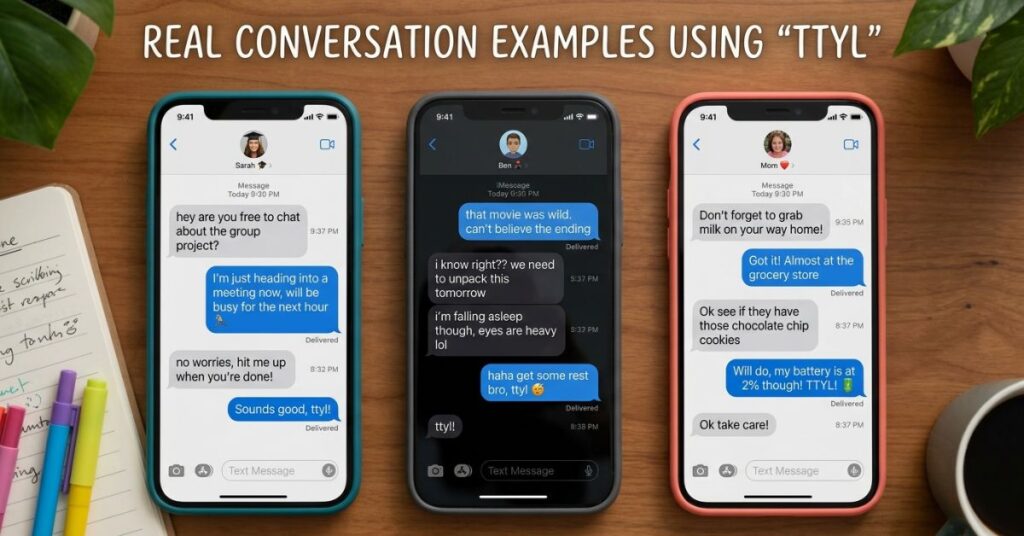
The easiest way to understand TTYL meaning in text is through everyday conversations. People use it when they need to pause a chat, leave for work, or finish another task.
Here are some natural examples:
1. Between friends
Maya: I need to finish my assignment. TTYL!
Sam: No problem. Talk soon!
2. Before class
Alex: Gotta head to class now. TTYL.
Jamie: Okay, see you later!
3. During a busy day
Jordan: Work is calling. I’ll message you later. TTYL!
Chris: Sure! Have a good day.
4. In a romantic conversation
Lily: I loved talking to you tonight. TTYL ❤️
Noah: Same here. Sleep well!
These examples show how TTYL fits different relationships. The tone depends on the surrounding words and emojis.
Usage of TTYL in Different Contexts
TTYL works in many everyday conversations, but its tone can change with the situation. It usually sounds relaxed, friendly, and informal. You can use it when leaving a chat without making the goodbye feel final.
Here are some common situations:
- Casual conversations: Use it when you’re busy or need a quick break.
- Friendship: End a fun conversation without sounding distant.
- Workplace chats: Use it with coworkers when your relationship is informal.
- Romantic messages: Add warmth with a friendly phrase or heart emoji.
- Family messages: Send it to relatives when you need to leave.
Example:
Friend: Are you free to talk tonight?
You: I’m heading out for dinner. TTYL!
Avoid using TTYL in formal emails or serious professional messages. A complete sign off usually sounds more appropriate.
How Gen Z Uses TTYL Today
Gen Z uses TTYL as a simple way to end or pause online conversations. Some younger users also treat it as a nostalgic expression from early internet culture. Its meaning hasn’t changed much, even though texting habits have evolved.
You may see it in:
- Instagram DMs between friends.
- Snapchat messages after a quick conversation.
- TikTok comments or private chats.
- Discord conversations during gaming sessions.
- Everyday SMS and group chats.
For some Gen Z users, TTYL feels slightly retro. Others use it naturally because it’s short and familiar.
Example conversation:
Ava: I’m logging off for tonight. TTYL!
Mia: Okayyy, talk tomorrow!
The abbreviation doesn’t automatically sound old-fashioned or ironic. Most of the time, it’s simply a casual sign off.
Does TTYL Mean Goodbye Forever?
No, TTYL doesn’t mean goodbye forever. It stands for Talk To You Later and usually signals a temporary break in communication. The sender is ending the current conversation, not necessarily ending the relationship.
You might receive TTYL when someone:
- Needs to attend a class or lecture.
- Has to return to work.
- Wants to sleep or relax.
- Is going somewhere with limited phone access.
- Needs a break from messaging.
Example conversation:
Sam: My phone is almost dead. TTYL!
Maya: Okay, charge it and message me later.
The phrase suggests another conversation may happen, but it doesn’t promise an exact time. If someone stops replying afterward, consider the broader situation instead of blaming the abbreviation.
Meaning Across TTYL Social Media
The basic meaning of TTYL stays the same across social media platforms. People use it to pause conversations, end DMs, or leave group chats. However, the way they use it can depend on each platform’s communication style.
Here’s how it appears across popular apps:
- WhatsApp: Friends use TTYL when ending private or group conversations.
- Instagram: It appears in DMs after casual chats.
- Snapchat: Users send it when leaving a conversation or ending a streak chat.
- TikTok: People may use it in comments and private messages.
- Facebook Messenger: It works as a quick goodbye between friends and relatives.
- Discord: Gamers use it when leaving voice or text conversations.
- Twitter/X: Users may include it in casual replies or direct messages.
Example:
Friend: I’m leaving the server for now. TTYL!
You: Catch you later!
No matter where you see it, TTYL usually means Talk To You Later.
Common Confusions
People sometimes confuse TTYL with other texting abbreviations because they all help end or pause conversations. However, each one has a slightly different purpose. Understanding these differences helps you respond naturally.
Here are some common mix-ups:
- TTYL vs. TTYS: TTYL means Talk To You Later, while TTYS means Talk To You Soon.
- TTYL vs. BRB: TTYL usually ends the current chat, but BRB means Be Right Back.
- TTYL vs. GTG: GTG means Got To Go and focuses on leaving.
- TTYL vs. CYA: CYA means See You and works as a casual goodbye.
- TTYL vs. L8R: L8R is a shortened spelling of Later.
Example conversation:
Alex: Need to grab some food. BRB!
Jamie: Okay. TTYL if I leave before you return.
The main difference is whether someone plans to return to the same conversation or simply says goodbye for now.
Related Slang Terms
Several texting abbreviations serve a similar purpose to TTYL. They help people communicate quickly without typing complete sentences. Some suggest a short break, while others work as casual farewells.
Here are useful terms to recognize:
| Abbreviation | Full Form | Meaning |
| TTYS | Talk To You Soon | Expecting another conversation soon |
| BRB | Be Right Back | Returning shortly |
| GTG | Got To Go | Leaving the conversation |
| L8R | Later | Casual goodbye |
| CYA | See You | Informal farewell |
| PEACE | Peace | Relaxed way to say goodbye |
For example:
Friend: Dinner is ready. GTG!
You: Enjoy your meal! TTYL.
These expressions aren’t always interchangeable. Choose one that matches your intention and the conversation’s tone.
How to Reply When Someone Says TTYL
When someone sends TTYL, you don’t need a complicated response. A short, friendly message is usually enough. You can mirror their casual tone or add a little warmth if you’re close.
Here are some natural replies:
Casual replies
- Okay, talk later!
- Sure, see you!
- No problem!
Friendly replies
- Take care!
- Talk soon, friend!
- Message me when you’re free!
Funny replies
- See you later, alligator!
- Don’t disappear forever!
- I’ll be here!
Romantic replies
- Talk soon, sweetheart ❤️
- I’ll miss chatting with you!
- Have a lovely evening!
Professional replies
- Sounds good. Speak later.
- Thanks, have a great day!
- Sure, talk to you soon.
Example:
Mia: I’m getting ready for bed. TTYL!
You: Good night! Sleep well.
Choose a reply that feels natural for your relationship.
When Did TTYL Go Mainstream?
TTYL became widely popular during the late 1990s and early 2000s. Its growth closely followed the rise of instant messaging and online chatting. Platforms like AOL Instant Messenger (AIM) helped make short expressions part of everyday digital communication.
People wanted quick ways to end conversations. TTYL offered a simple alternative to typing Talk To You Later.
Its popularity grew through several stages:
- Late 1990s: Instant messaging introduced TTYL to online communities.
- Early 2000s: AIM users helped spread the abbreviation.
- 2000s: SMS texting made short abbreviations more useful.
- 2010s: Smartphones and social media kept it familiar.
- 2020s: New generations continued using it in chats and DMs.
Today, TTYL remains a recognizable piece of internet slang. Its original meaning still works across modern messaging platforms.
Conclusion
Understanding TTYL makes texting and online conversations easier. It simply means Talk To You Later and works as a casual goodbye. You can use TTYL with friends, family, or people you know well. Its tone depends on the conversation and your relationship with the sender. Sometimes, TTYL sounds friendly, warm, or playful. It doesn’t usually mean goodbye forever or signal that someone is upset.
Now you know how TTYL works in text messages, social media chats, and everyday conversations. You also know how to reply when someone sends TTYL. Use it when you need to leave a casual chat or pause a conversation. Just remember that TTYL may not suit every situation. Choose your words based on the person and setting. With these simple tips, you’ll understand TTYL and use it with confidence.
FAQs
What Does TTYL Mean in Text?
TTYL means Talk To You Later. People use it to end a conversation casually and suggest they’ll chat again.
Is TTYL Flirting?
Not usually. TTYL simply means Talk To You Later, but a warm message or heart emoji may add romantic interest.
What Does CYA Mean in Text From a Girl?
CYA usually means See You. A girl may use it as a casual goodbye without suggesting romantic interest.
What Does GTG and TTYL Mean?
GTG means Got To Go, while TTYL means Talk To You Later. Both are common ways to leave conversations.
What Should I Reply to TTYL?
Reply with Talk soon, Take care, or Okay, see you later. Keep your response friendly and match their tone.
What does TTYL mean in chat?
TTYL means Talk To You Later in chats. It’s a casual way to pause a conversation without saying goodbye forever.
What does TTYL mean in TikTok?
On TikTok, TTYL means Talk To You Later. Users add it to comments, captions, or messages when leaving conversations.
