

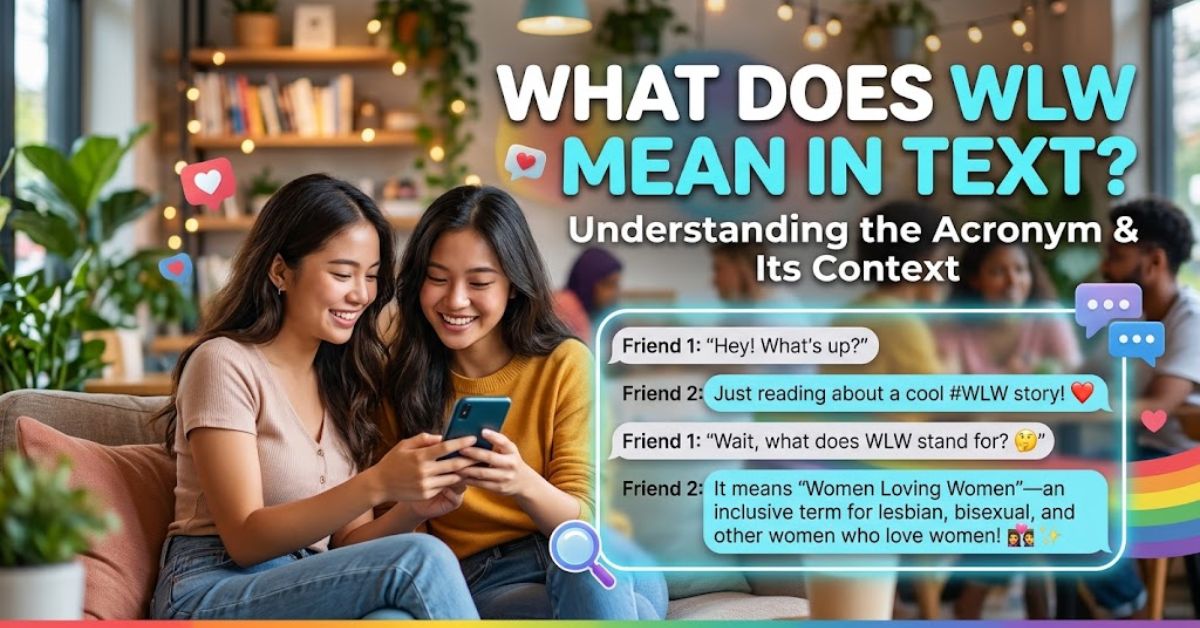
Ever come across WLW in a text message or social media post and wonder what it means? These three letters carry a meaningful message about love, attraction, and identity. WLW stands for Women Loving Women. People use it to talk about romantic relationships, dating, and LGBTQ+ experiences. You’ll also find it in movie discussions, book recommendations, and online fan communities.
So, what does wlw mean in text, and why do people use it so often? The term offers an inclusive way to describe women who love women. It can include different identities, not just one specific label. You may spot it on TikTok, Instagram, Reddit, and dating apps. In this guide, you’ll learn its meaning, common uses, real-life examples, and related terms. You’ll also see how to use WLW naturally and respectfully in everyday conversations.
What Does WLW Mean?
Have you ever seen WLW in a text message, TikTok caption, or Instagram comment? If so, you might wonder what those three letters mean. WLW stands for Women Loving Women. It describes women who experience emotional, romantic, or physical attraction toward other women. People commonly use this term in LGBTQ+ communities, online conversations, dating profiles, and entertainment discussions.
If you’re searching for what does wlw mean in text, the answer is simple. It usually describes women who love or feel attracted to women. WLW is also an inclusive umbrella term that covers different identities, including lesbians, bisexual women, and queer women.
You’ll often see it in conversations about relationships, representation, and queer culture. Its meaning can depend on the context, but it generally relates to same-gender attraction.
Quick Definition (Featured Snippet Style)
WLW means Women Loving Women. It’s an inclusive term for women who experience romantic, emotional, or physical attraction toward other women. It can include lesbians, bisexual women, pansexual women, and queer women. People commonly use WLW in text messages, dating apps, social media posts, and LGBTQ+ discussions.
For example:
- Friend: Do you have any good WLW movie recommendations?
- You: Yes! I’ve watched a few amazing ones lately.
Here, WLW refers to movies featuring romantic relationships between women.
Simple Meaning of WLW
Think of WLW as a simple way to describe women who love women. Instead of naming one specific sexual orientation, this term focuses on shared attraction and experiences. That’s what makes it different from some identity labels.
For example, a lesbian may use WLW to describe herself. A bisexual woman attracted to multiple genders may also feel comfortable using it.
The term can include:
- Lesbian: A woman attracted to women.
- Bisexual: Someone attracted to more than one gender.
- Pansexual: Someone whose attraction isn’t limited by gender.
- Queer: A broad term for people outside traditional sexual or gender norms.
- Questioning: Someone still exploring their identity.
Some nonbinary people also connect with WLW terminology. However, personal identification matters. Not everyone prefers the same labels. Overall, WLW offers a less restrictive and inclusive way to discuss women loving women.
Where Is WLW Used?
WLW appears in many places across modern digital culture. You might notice it in text messages, social media captions, dating profiles, and entertainment discussions. People use this searchable term to find content and connect with others who share similar interests.
For example, someone might search for WLW books before choosing their next novel. Another person might use the abbreviation when discussing a favorite fictional couple.
Common places where you’ll encounter WLW include:
- Social media platforms and online communities.
- Dating apps and personal profiles.
- Movies, television shows, and fandoms.
- LGBTQ+ discussions and educational content.
- Text messages and casual conversations.
Its meaning usually stays connected to women loving women. However, the exact context helps you understand whether someone discusses relationships, identity, or entertainment.
Social Media
Social media has made WLW easier to recognize and use. You’ll frequently find this abbreviation on TikTok, Instagram, X (Twitter), Tumblr, and Reddit. Users include it in captions, hashtags, memes, edits, and discussions about relationships.
For example, TikTok creators often share WLW romance edits or recommend stories featuring female couples. Instagram users may add related hashtags to help others find their posts.
Popular hashtags include:
- #wlw
- #WLWBooks
- #WLWTok
You might also see phrases like WLW energy or WLW vibes. These expressions often describe romantic tension or chemistry between female characters.
Example conversation:
- Friend: Have you seen that new TikTok edit?
- You: Yes! The characters have such strong WLW vibes.
Here, the phrase describes the perceived romantic connection between two female characters.
Dating Apps
Dating apps provide another common place to find WLW. Women sometimes include this abbreviation in their dating profiles to describe their interests or dating preferences. It helps people recognize relevant profiles without writing a lengthy explanation.
You’ll commonly encounter WLW on platforms such as:
- Tinder
- HER
- Bumble
- Hinge
For example, someone might write WLW only in their profile. This generally signals an interest in women or a preference for connections within the WLW community.
Example conversation:
- Person A: I noticed WLW in your dating profile. What does it mean?
- Person B: It means Women Loving Women. I’m interested in dating women.
The term can make online introductions easier. However, never assume someone’s complete identity from one abbreviation. Respect their personal labels and preferences.
TV Shows, Movies, and Fandoms
WLW is also popular among people who enjoy movies, television, books, and fictional relationships. Fans use it when discussing female characters who share romantic feelings or relationships. You’ll often find the term in fandom discussions and entertainment recommendations.
For example, someone searching for WLW movies may want stories featuring romance between women. Others might look for WLW TV shows, Netflix shows, or WLW anime.
Common entertainment-related phrases include:
- WLW romance
- WLW characters
- WLW storyline
- WLW fanfiction
- WLW fantasy novels
- WLW fiction
- WLW couples
- WLW songs
- WLW celebrities
Example conversation:
- Friend: Do you know any good WLW fantasy novels?
- You: Yes! I love stories with strong female characters and meaningful romance.
Fans also use WLW energy to describe chemistry or romantic tension between characters. The phrase helps people find stories they enjoy.
LGBTQ+ Discussions
WLW frequently appears in LGBTQ+ discussions about identity, relationships, inclusion, and representation. It gives people a simple way to talk about women attracted to women without focusing on one specific orientation.
The abbreviation can include lesbians, bisexual women, pansexual women, and queer women. Some questioning people may also use it while exploring their feelings.
You’ll commonly see WLW in conversations about:
- LGBTQ+ representation in entertainment.
- Respectful language and personal identity labels.
- Same-gender attraction and relationships.
- Inclusion in online communities.
- Queer culture and shared experiences.
For example:
Person A: Why do people use WLW instead of lesbian?
Person B: Because WLW can include women with different sexual orientations.
The term supports inclusive conversations. Still, personal labels deserve respect. Never assign an identity to someone without their consent.
Why Do People Use WLW?
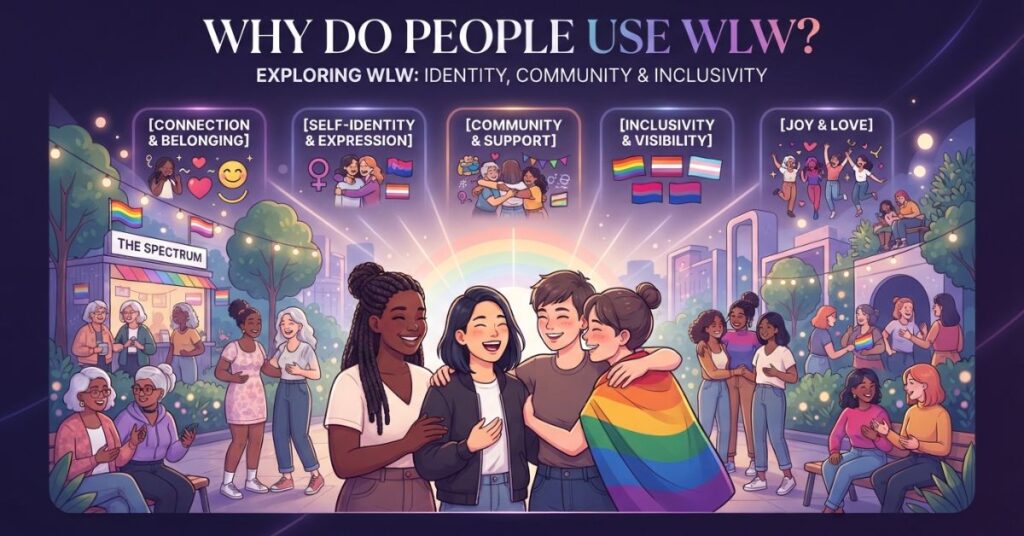
People use WLW because it makes conversations about women loving women easier. The abbreviation is short, recognizable, and widely understood across many online communities. It also helps people find relevant content and connect with others.
You might see it in dating profiles, social media captions, book recommendations, or discussions about LGBTQ+ representation.
Here are four common reasons behind its popularity:
- It provides inclusive language for different identities.
- It can feel more comfortable than specific labels.
- It makes relevant online content easier to find.
- It helps people connect with supportive communities.
Whether someone uses WLW in a casual message or an educational discussion, the term can make communication clearer. Its value comes from its flexibility and the sense of connection it can create.
1. It’s Inclusive
One major reason people use WLW is its inclusive meaning. Not every woman attracted to women identifies as a lesbian. Some identify as bisexual, pansexual, queer, or questioning.
WLW creates room for these different experiences without requiring everyone to choose one specific identity label. It focuses on attraction rather than limiting people to a single category.
For example, a bisexual woman may use WLW when discussing a romantic relationship with another woman. A lesbian might use the same term when recommending a movie.
Example conversation:
- Friend: Are all WLW women lesbians?
- You: No. WLW also includes women with other sexual orientations.
This flexibility makes WLW a helpful umbrella term. It supports inclusion while allowing people to choose the labels that feel right for them.
2. It Feels Safer and Softer
Identity can be personal, so not everyone feels comfortable sharing specific labels publicly. For some people, WLW offers a more general way to discuss attraction without explaining their entire identity.
The abbreviation can feel less restrictive in social media posts, dating profiles, and casual conversations. It also allows people to discuss relationships without making unnecessary personal details public.
However, comfort depends on the individual. Some people prefer specific labels, while others like broader language.
Example conversation:
- Friend: Why did you write WLW in your profile?
- You: It describes my interests without sharing too much personal information.
WLW can therefore create a comfortable starting point for conversations. It doesn’t require anyone to explain more than they want. Most importantly, people should always feel free to choose their own identity labels.
3. It Helps People Find Similar Content
Finding entertainment that matches your interests can sometimes feel like searching for a needle in a haystack. WLW makes that process easier because it’s a searchable term across many online platforms.
People use it to find stories, recommendations, creators, and discussions featuring women loving women. A quick search can lead you toward content that matches your interests.
For example, you might search for:
- WLW books and fantasy novels.
- WLW movies and Netflix shows.
- WLW anime and fanfiction.
- WLW songs and celebrities.
- WLW creators and couples.
Example conversation:
- Friend: How did you find that amazing romance novel?
- You: I searched for WLW book recommendations on Reddit.
Hashtags such as #WLWBooks and #WLWTok also support content discovery. This makes WLW a useful, social-media optimized term for finding relevant entertainment and online discussions.
4. It Builds Community
Sometimes, finding people with similar experiences makes the internet feel a little less lonely. WLW helps create that connection by bringing people together around shared interests, relationships, and experiences.
You’ll find WLW communities on TikTok, Tumblr, Reddit, Instagram, and other social media platforms. Members often share personal stories, relationship advice, entertainment recommendations, and supportive discussions.
These spaces can also encourage better representation in movies, books, music, and television.
Example conversation:
- Person A: I finally found a community that shares my interests.
- Person B: That’s great! WLW communities can help people connect.
People also use WLW hashtags to support creators and highlight meaningful stories. For many users, the abbreviation represents more than attraction. It can also reflect inclusion, belonging, and shared experiences within queer culture.
Real-Life WLW Examples
Understanding WLW becomes easier when you see how people use it in everyday conversations. WLW stands for Women Loving Women. People often use it when discussing relationships, entertainment, books, and LGBTQ+ communities.
You might see WLW in a social media caption, dating profile, or book review. It can describe romantic stories, personal experiences, or content featuring women attracted to women.
Here are some common examples:
- A TikTok creator uses #WLW on a video about two women in love.
- Someone adds WLW to a dating profile to describe their interests or identity.
- A reader recommends a romantic novel with a WLW storyline.
- Fans discuss the chemistry between two female characters.
These examples show how WLW works in different online spaces.
Example 1: TikTok Caption
TikTok users often add WLW to captions, hashtags, and video descriptions. It helps viewers find content about women loving women. Creators may use it for romantic edits, relationship stories, fictional couples, or personal experiences.
For example, someone might post a video showing two women sharing a sweet moment. They could add hashtags like #wlw or #WLWTok.
Example caption:
- Two girls, one beautiful love story. #wlw
- This is the kind of romance I love.
Conversation example:
- Friend 1: Have you seen that new TikTok couple edit?
- Friend 2: Yes! I love finding WLW content.
Here, WLW describes the video’s theme. It doesn’t automatically reveal the creator’s identity or relationship status. It simply helps viewers understand the content.
Example 2: Dating Profile
People may use WLW in dating profiles to describe their attraction or the kind of relationships they want. It can help others understand their interests without writing a long explanation.
For example, someone might mention WLW when looking for women who share similar experiences. Others may use it to describe their dating preferences or connect with LGBTQ+ communities.
Example profile lines:
- Looking for genuine connections and WLW romance.
- A book lover who enjoys meeting queer women.
- Here for meaningful conversations and shared interests.
Conversation example:
- Person 1: I noticed you mentioned WLW in your bio.
- Person 2: Yes, I enjoy connecting with women who understand that experience.
Remember, WLW is an umbrella term, not a complete description of someone’s identity. Always respect the labels people choose for themselves.
Example 3: Book Recommendation
Readers often use WLW when recommending books with romantic relationships between women. You may see the term in book reviews, reading lists, online groups, and social media posts.
It helps readers find stories that match their interests. These books may include romance, fantasy, drama, mystery, or coming-of-age themes. Some readers also search for WLW fantasy novels or WLW fiction with strong female characters.
Example recommendation:
- If you enjoy emotional romance, try this WLW novel.
- This fantasy book has a beautiful WLW storyline.
Conversation example:
- Friend 1: Can you recommend a good romance novel?
- Friend 2: Sure! Do you enjoy WLW books?
- Friend 1: Yes, I love stories about women falling in love.
In this context, WLW describes the relationship or central theme of a book.
Example 4: Fan Community
Fan communities often use WLW when discussing female characters, fictional couples, and romantic storylines. You may find the term in discussions about movies, anime, television shows, and fanfiction.
Fans sometimes use WLW to describe romantic chemistry between two female characters. They may also add the hashtag to edits, artwork, reviews, and character discussions.
Common examples include:
- This series has an amazing WLW couple.
- I need more WLW characters in fantasy shows.
- Their storyline has such beautiful WLW energy.
Conversation example:
- Fan 1: Why is everyone talking about these two characters?
- Fan 2: Their chemistry is amazing. Fans love their WLW storyline.
Here, WLW helps fans find similar content and connect with people who enjoy the same stories.
WLW vs Similar Terms
WLW is related to several LGBTQ+ terms, but they don’t all mean exactly the same thing. It describes women loving women and works as a broad umbrella phrase.
Other terms focus on specific identities or different forms of attraction. For example, lesbian commonly describes women attracted to women. Bisexual describes attraction to more than one gender, while pansexual describes attraction regardless of gender.
Here are some related terms:
- WLW: Women loving women; an umbrella term.
- Lesbian: An identity commonly used by women attracted to women.
- Bisexual: Attraction to more than one gender.
- Sapphic: A broad term connected with women or woman-aligned people attracted to women.
- Queer: An inclusive identity term used by some LGBTQ+ people.
People choose labels based on their own experiences. These terms shouldn’t be treated as interchangeable.
Is WLW the Same as Lesbian?
WLW and lesbian are closely related, but they aren’t exactly the same. WLW means Women Loving Women. It describes attraction or relationships involving women without naming one specific sexual orientation.
Lesbian is an identity label commonly used by women who are attracted to women. WLW can also include bisexual and pansexual women who experience attraction to women.
For example:
- A lesbian woman may describe herself as WLW.
- A bisexual woman may also use WLW.
- Someone may enjoy WLW stories without identifying as LGBTQ+.
Conversation example:
- Person 1: Does WLW only mean lesbian?
- Person 2: No. It can include different women who love women.
The key difference is personal identity. Not everyone who fits the WLW description chooses the same label.
When Should You Use WLW?
You can use WLW when discussing relationships, entertainment, books, or communities involving women loving women. It works well in casual conversations and online spaces where people understand LGBTQ+ terminology.
For example, you might use it in a social media caption, dating discussion, book recommendation, or fandom post. However, context matters. Don’t assume someone identifies with WLW just because of their relationships or interests.
Use the term when it clearly fits the conversation and feels respectful. You should also follow the language people use for themselves.
Here are some situations where WLW may be appropriate:
- Discussing romantic relationships between women.
- Recommending WLW movies, books, or TV shows.
- Sharing LGBTQ+ community content.
- Talking about representation in entertainment.
Relationships
WLW is useful when talking about romantic relationships between women. People may use it in conversations about dating, love, attraction, and relationship experiences.
For example, someone might describe a couple as a WLW couple. Another person may use the term when discussing their dating preferences or looking for similar experiences.
Conversation example:
- Friend 1: What kind of romance stories do you enjoy?
- Friend 2: I really like WLW relationships in movies.
You can also use WLW when discussing relationship advice or LGBTQ+ representation. It provides a simple way to describe the topic without adding a long explanation.
However, don’t use the label to define someone without their permission. Personal identity is always their choice.
Entertainment
WLW is common in conversations about movies, television shows, books, anime, and fanfiction. It helps people find stories that feature romantic connections between women.
You may see it in reviews, recommendations, streaming discussions, and fandom hashtags. Readers and viewers often search for WLW movies, WLW TV shows, or WLW romance novels.
Conversation example:
- Friend 1: What should I watch this weekend?
- Friend 2: Try this series. It has a lovely WLW storyline.
You can also use WLW when discussing characters, fictional couples, or romantic tension in a story.
For example:
- This show has great WLW representation.
- I enjoy reading WLW fantasy novels.
- Their characters have amazing chemistry.
In entertainment discussions, WLW usually describes the story or relationship rather than someone’s personal identity.
Identity Discussions
WLW can be helpful during respectful conversations about attraction, sexual orientation, and LGBTQ+ identity. It offers a broad way to discuss women who love women without assuming everyone uses the same label.
For example, a person may identify as lesbian, bisexual, pansexual, or queer while also connecting with the WLW umbrella. Others may prefer a different term or no label at all.
Conversation example:
- Person 1: Is WLW a sexual orientation?
- Person 2: It’s an umbrella term that describes women loving women.
Use the term carefully when discussing someone’s identity. Don’t decide which label another person should use.
Respectful identity discussions leave room for personal choice. The goal is understanding, not putting people into fixed categories.
Community Content
WLW is also useful when sharing content with LGBTQ+ communities. People use it in posts, captions, hashtags, and online discussions to connect with others who enjoy similar topics.
For example, creators may use #wlw to share relationship stories, artwork, memes, book recommendations, or entertainment edits. Readers may add #WLWBooks when recommending novels featuring women loving women.
Common uses include:
- Sharing personal stories and experiences.
- Posting WLW memes and romantic edits.
- Recommending books, movies, and TV shows.
- Finding supportive online communities.
- Discussing LGBTQ+ representation and inclusion.
Conversation example:
- User 1: Where can I find more WLW book recommendations?
- User 2: Try searching #WLWBooks on social media.
In community content, WLW helps people find relevant discussions. Use it respectfully and avoid labeling others without their consent.
When You Should Be Careful
Although WLW is an inclusive term, you should use it thoughtfully. Not everyone feels comfortable with the same identity labels. Some people prefer lesbian, bisexual, queer, or another personal term.
Avoid assuming someone’s identity based on their appearance, relationships, or social media posts. Also, don’t use WLW to describe someone without considering how they identify.
Be careful in these situations:
- When discussing someone’s personal identity.
- When writing about a person who hasn’t shared their label.
- When talking about sensitive LGBTQ+ experiences.
- When using WLW in professional or formal communication.
Conversation example:
- Person 1: Is she WLW?
- Person 2: I’m not sure. It’s better not to assume her identity.
The main idea is simple: use WLW respectfully and let people choose their own labels.
Common Misunderstandings About WLW
People sometimes misunderstand WLW because they see it used in different online spaces. Some think it’s another word for lesbian, while others believe it’s only a TikTok trend.
However, WLW has a broader meaning. It stands for Women Loving Women and can describe attraction, relationships, stories, and online communities.
Understanding these differences helps you use the term correctly. It also prevents confusion during conversations about LGBTQ+ identities and representation.
Here are four common misunderstandings about WLW and what they actually mean.
“WLW Only Means Lesbian”
This is one of the most common misunderstandings about WLW. Although lesbian women may use the term, WLW isn’t limited to lesbian identity.
WLW means Women Loving Women. It can also describe bisexual and pansexual women who experience attraction to women. The term focuses on the attraction or relationship rather than one specific sexual orientation.
For example, a bisexual woman may use WLW when discussing her relationship with another woman. A lesbian woman may use it in the same context.
Conversation example:
- Friend 1: Does WLW mean someone is lesbian?
- Friend 2: Not always. Bisexual and pansexual women may use it too.
Remember, WLW is an umbrella term. It doesn’t replace someone’s personal identity label.
“WLW Is Just TikTok Slang”
Some people believe WLW started as TikTok slang because they often see it in short videos and hashtags. However, the term isn’t limited to one social media platform.
People use WLW across different online spaces. You may find it on Instagram, Tumblr, Reddit, X, dating apps, and LGBTQ+ discussion forums.
It also appears in book recommendations, entertainment reviews, and conversations about representation. Hashtags like #wlw and #WLWTok simply help users find related content.
Conversation example:
- Person 1: I thought WLW was only a TikTok trend.
- Person 2: No, people use it in many online communities.
TikTok has helped make the term more visible. Still, its meaning goes beyond short videos and social media trends.
“Only Young People Use WLW”
Another common misconception is that WLW belongs only to younger internet users. This idea comes from seeing the abbreviation frequently on TikTok and other social platforms.
In reality, people of different ages can use or understand WLW. Adults may use it in dating discussions, LGBTQ+ communities, entertainment conversations, and online book groups.
The term is useful because it offers a short way to discuss women loving women. Its meaning doesn’t depend on someone’s age or generation.
Conversation example:
- Person 1: Isn’t WLW just something teenagers say online?
- Person 2: No, adults use it in conversations too.
You may see different age groups use different platforms. However, WLW itself isn’t restricted to young people.
“WLW Is Offensive”
WLW isn’t generally an offensive term. It stands for Women Loving Women and is commonly used as an inclusive phrase in LGBTQ+ discussions and online communities.
Many people use it to discuss attraction, relationships, books, movies, and representation. However, context and personal preference still matter.
Some people may prefer labels such as lesbian, bisexual, or queer. Others may not identify with WLW at all. You should respect those choices instead of forcing the term on someone.
Conversation example:
- Person 1: Is it rude to use WLW in a caption?
- Person 2: Not usually. Just make sure it fits the topic.
The term itself isn’t the problem. Using any identity label without respect or consent can create discomfort.
Pro Tips for Using WLW Naturally
Using WLW naturally is easy once you understand its meaning. The term works best when you’re discussing women loving women, LGBTQ+ relationships, or related entertainment and community content.
You don’t need to add it to every conversation. Choose it when it makes your message clearer and fits the topic.
Keep these simple tips in mind:
- Use WLW when the context is relevant.
- Understand that it includes different experiences.
- Respect the identity labels people choose.
- Avoid assigning the term to someone without permission.
Conversation example:
- Friend 1: Should I call this a WLW romance?
- Friend 2: Yes, if the story focuses on a romantic relationship between women.
These small steps help you communicate clearly and respectfully.
Use It in Relevant Contexts
Use WLW when you’re discussing a topic connected to women loving women. It can describe romantic relationships, fictional couples, dating conversations, and LGBTQ+ representation.
For example, you might use it in a TikTok caption about a romantic scene. You can also use it when recommending a book with a WLW storyline.
Natural examples include:
- This movie has a beautiful WLW romance.
- Can you recommend some good WLW books?
- I enjoy watching shows with WLW characters.
- Their relationship is an important part of the story.
Conversation example:
- Friend 1: What kind of books do you read?
- Friend 2: Mostly fantasy and WLW romance.
Avoid using WLW when the topic has no connection to its meaning. Relevant usage keeps your message clear and natural.
Understand the Inclusive Meaning
Before using WLW, remember that it describes women loving women. It isn’t limited to one sexual orientation or personal identity label.
For example, lesbian, bisexual, and pansexual women may use WLW when discussing attraction to women. The term can describe shared experiences without placing everyone into the same category.
This inclusive meaning makes WLW useful in online conversations. It also helps people find relevant books, movies, dating discussions, and community content.
Conversation example:
- Person 1: Does WLW include bisexual women?
- Person 2: Yes, bisexual women who love women may use the term.
Keep in mind that not everyone will choose WLW for themselves. Understanding its broad meaning helps you avoid incorrect assumptions.
Respect Personal Labels
Identity labels are personal. Some people feel comfortable using WLW, while others prefer lesbian, bisexual, queer, or another term.
You should always respect the language someone uses for themselves. Don’t decide their identity based on their dating history, appearance, or relationships.
For example, someone may describe herself as bisexual rather than WLW. Another person may use both terms because they describe different parts of her experience.
Conversation example:
- Person 1: Can I describe you as WLW?
- Person 2: I prefer the term lesbian.
- Person 1: That’s completely fine.
Respecting personal labels makes conversations more welcoming. When you’re unsure, use the person’s own words or ask politely.
Don’t Force the Term
WLW is an optional umbrella term, not a label everyone must use. Some women may connect with it, while others prefer different words to describe their experiences.
Don’t pressure someone to identify as WLW. Also, avoid adding the term to someone’s profile, story, or description without knowing whether they feel comfortable with it.
The same rule applies to fictional discussions involving real people. Don’t assume someone’s sexuality based on rumors or fan interpretations.
Conversation example:
- Friend 1: You should call yourself WLW.
- Friend 2: I prefer not to use that label.
- Friend 1: No problem. I’ll respect that.
The best approach is to let people choose their own language. Respect matters more than using a popular abbreviation.
Why WLW Became So Popular Online
WLW became more visible online because people wanted simple ways to find and discuss content about women loving women. Social media made the abbreviation easy to share through captions, hashtags, comments, and video edits.
Platforms like TikTok, Instagram, Tumblr, and Reddit helped users connect with similar interests. People could search for WLW books, romantic edits, fictional couples, and LGBTQ+ discussions.
Several factors helped increase its visibility:
- Easy communication: Three letters express a longer phrase.
- Content discovery: Hashtags help users find related posts.
- Community building: People connect through shared interests.
- Representation: Users discuss women-loving-women stories and characters.
- Online conversations: The term fits captions, comments, and casual messages.
For example:
- Friend 1: How did you find these romance edits?
- Friend 2: I searched for #wlw on TikTok.
WLW became a useful term for online conversations. Its popularity also reflects wider interest in inclusive language and LGBTQ+ representation.
WLW in Pop Culture
WLW appears frequently in pop culture discussions about movies, TV shows, books, music, anime, and fictional relationships. Fans use the term when talking about stories that feature romantic connections between women.
You may see it in reviews, fanfiction communities, character edits, and entertainment recommendations. It also helps viewers find stories with WLW characters and relationships.
Common examples include:
- Movies and TV shows: Discussions about women-loving-women couples and storylines.
- Books: Recommendations for WLW romance and fantasy novels.
- Anime: Conversations about female characters and romantic connections.
- Music: Playlists featuring songs that connect with WLW experiences.
- Fandoms: Fan edits, artwork, and discussions about fictional couples.
Conversation example:
- Friend 1: What kind of shows are you watching lately?
- Friend 2: I’m looking for shows with good WLW representation.
The term helps fans describe their interests and find similar content. It also creates space for conversations about LGBTQ+ visibility in entertainment.
FAQs
What does WLW stand for?
WLW stands for Women Loving Women. It describes romantic or emotional attraction between women in relationships and conversations.
Is WLW the same as lesbian?
No, WLW is broader than lesbian. It can also include bisexual and pansexual women who love women.
Where is WLW commonly used?
WLW appears on TikTok, Instagram, Reddit, dating apps, and online communities discussing relationships, books, and entertainment.
Is WLW a respectful term?
Yes, WLW is generally respectful and inclusive. When discussing what does wlw mean in text, always respect personal identity labels.
Final Thoughts
WLW is a simple term with an important meaning. It stands for Women Loving Women and describes attraction between women. Understanding what does wlw mean in text helps you follow social media posts, dating conversations, and online discussions. You may see it on TikTok, Instagram, Reddit, or in book recommendations. It can also describe romantic stories and fictional couples. Remember, WLW is an inclusive term, not just another word for lesbian.
Now that you know what does wlw mean in text, you can use it more confidently. Keep the context in mind and respect everyone’s personal identity. What does wlw mean in text can have a simple answer, but its use connects people through shared experiences. Whether you’re reading a caption or discussing a WLW movie, understanding the term makes online conversations easier. Use it naturally, kindly, and respectfully.
